Domingo

Instead of taking an early walk downtown today, I thought I’d drag the dog into the car and find a place for an actual hike later in the day. A blog recommended the area near the dam above the city, and that sounded like an easy first hike. You take 286 south out of La Paz for about 10 km and turn left. But I thought, while we’re at it, let’s go all the way to the end of 286 to see what the Sea looks like from there, and stop for the hike on our way home.
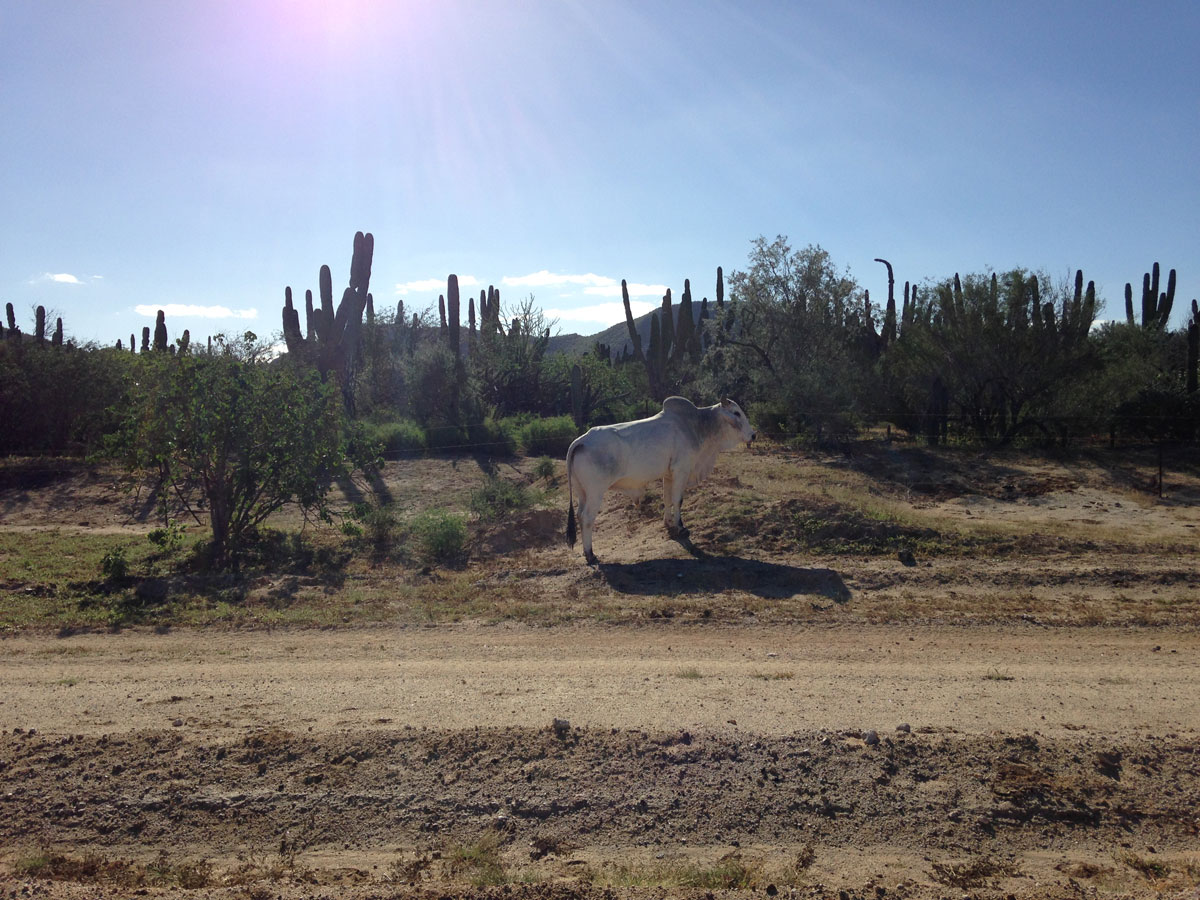
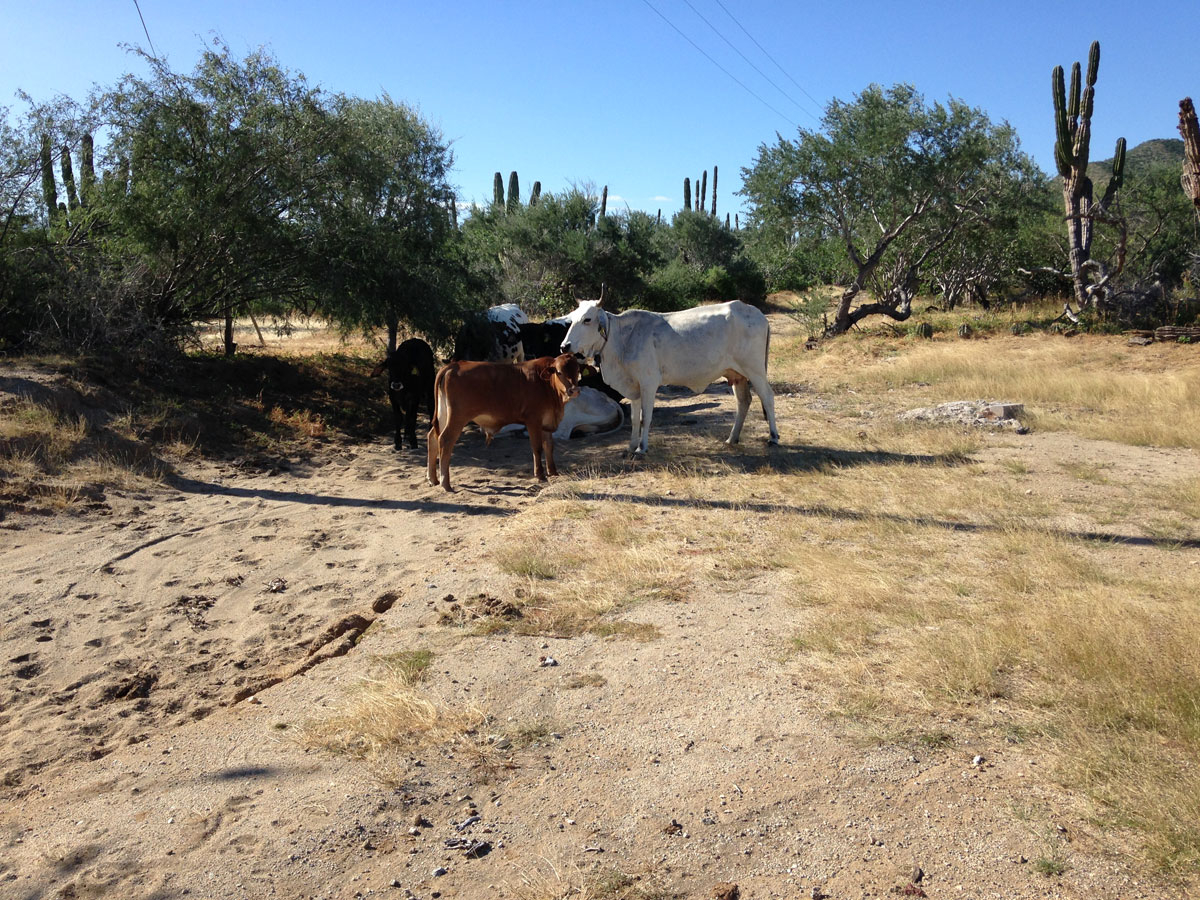
brahma by the side of the road
Brahma by the side of the road

I think the distance to the ocean from La Paz was ~70 km. The road was decent, but there were cattle on or near it in several places. We went through a small town where a line of cars coming from the opposite direction was backed up for half a mile waiting to turn into one street. I assume that was the street the church is on, though I couldn’t see it.
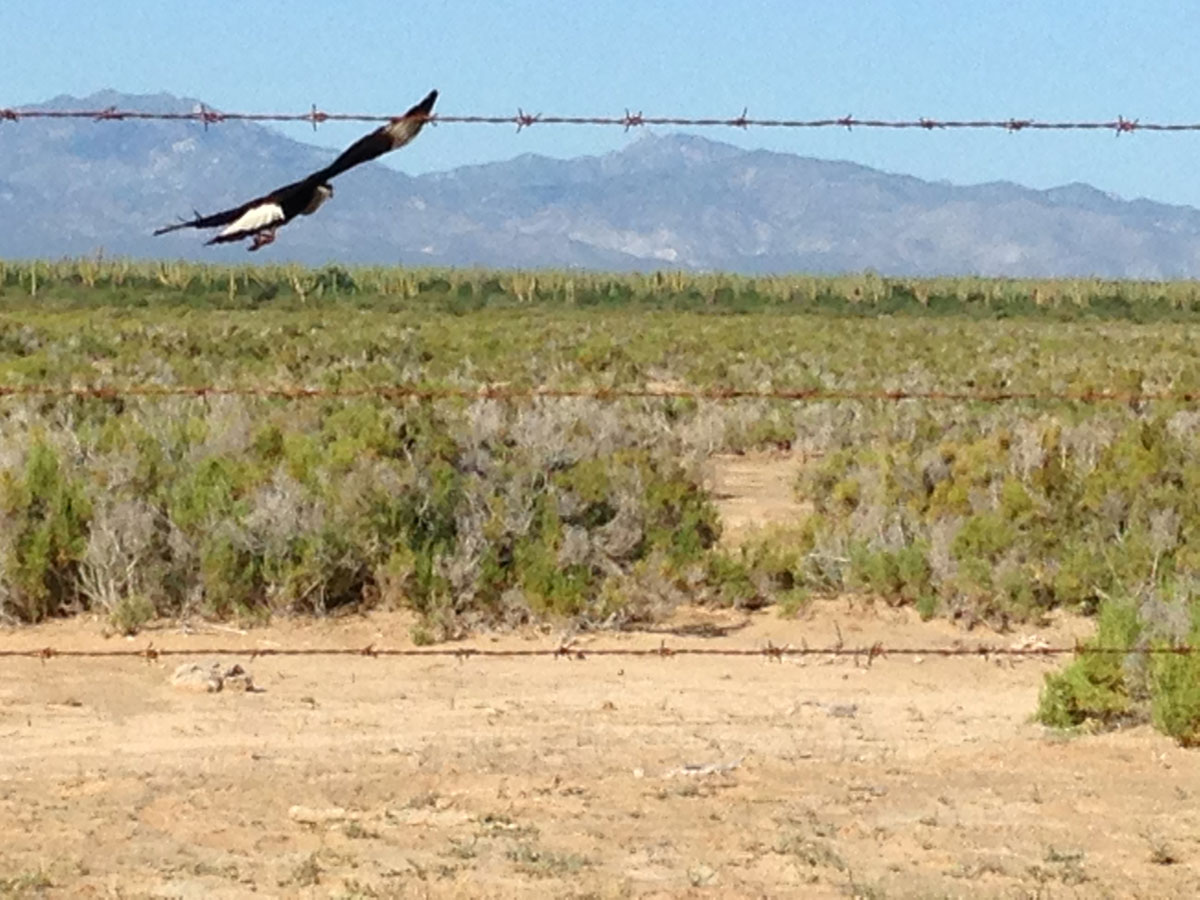
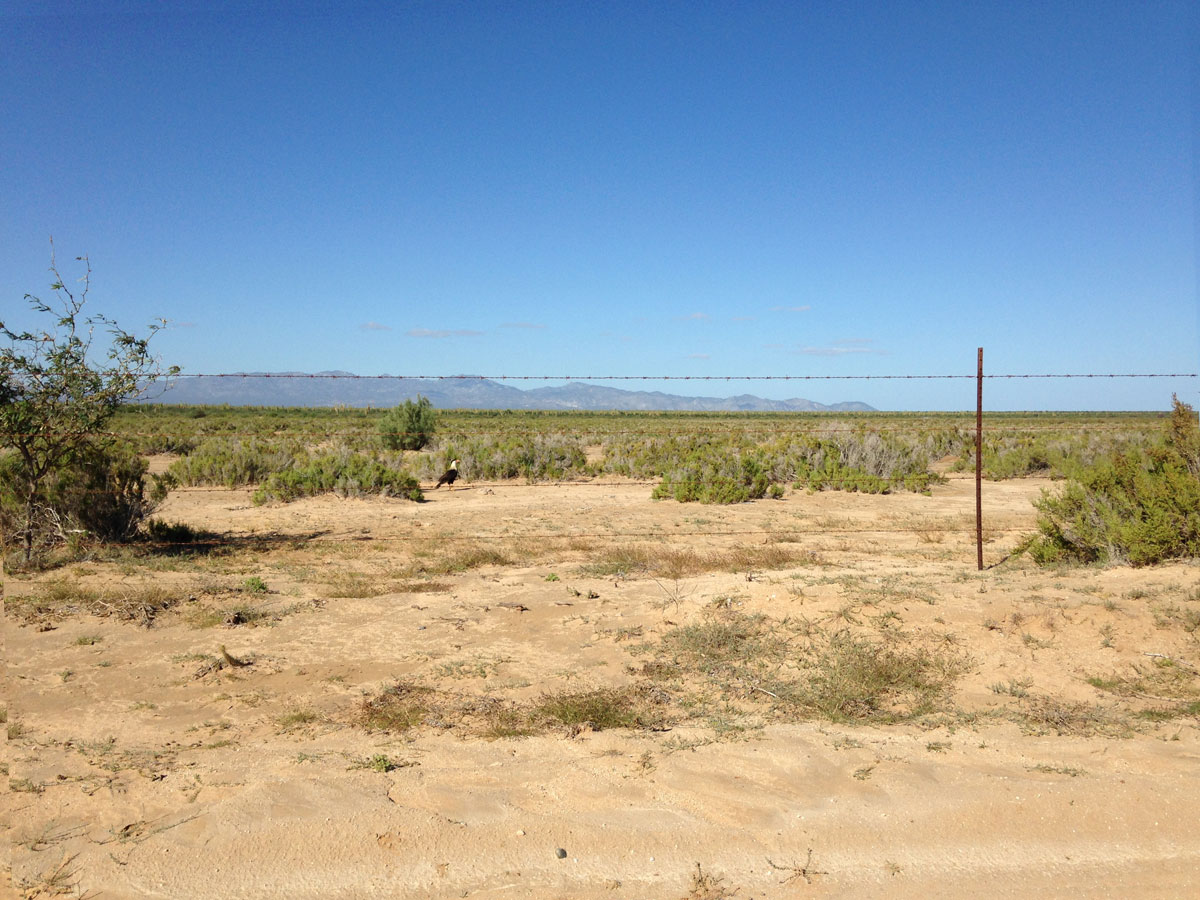
Caracara in flight
Caracara in flight
caracara
Caracara

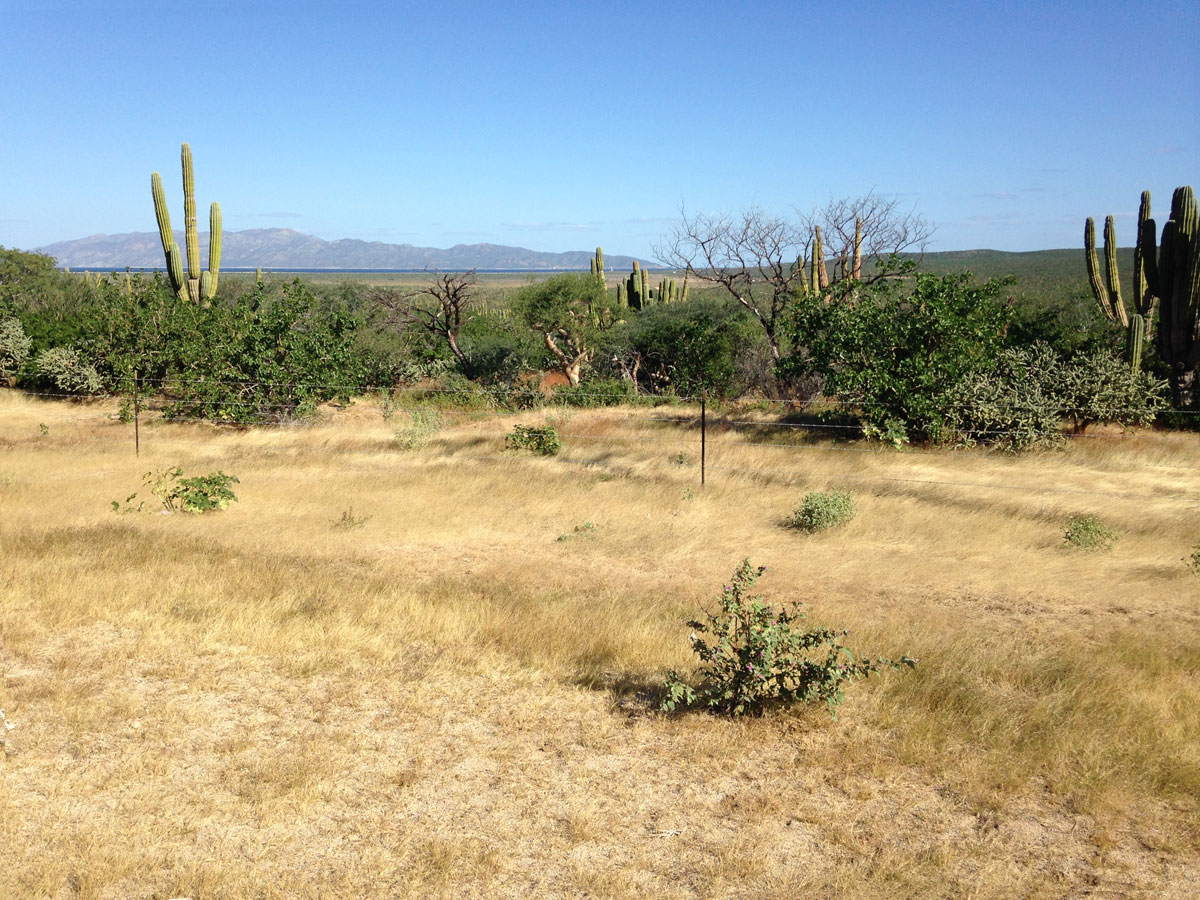
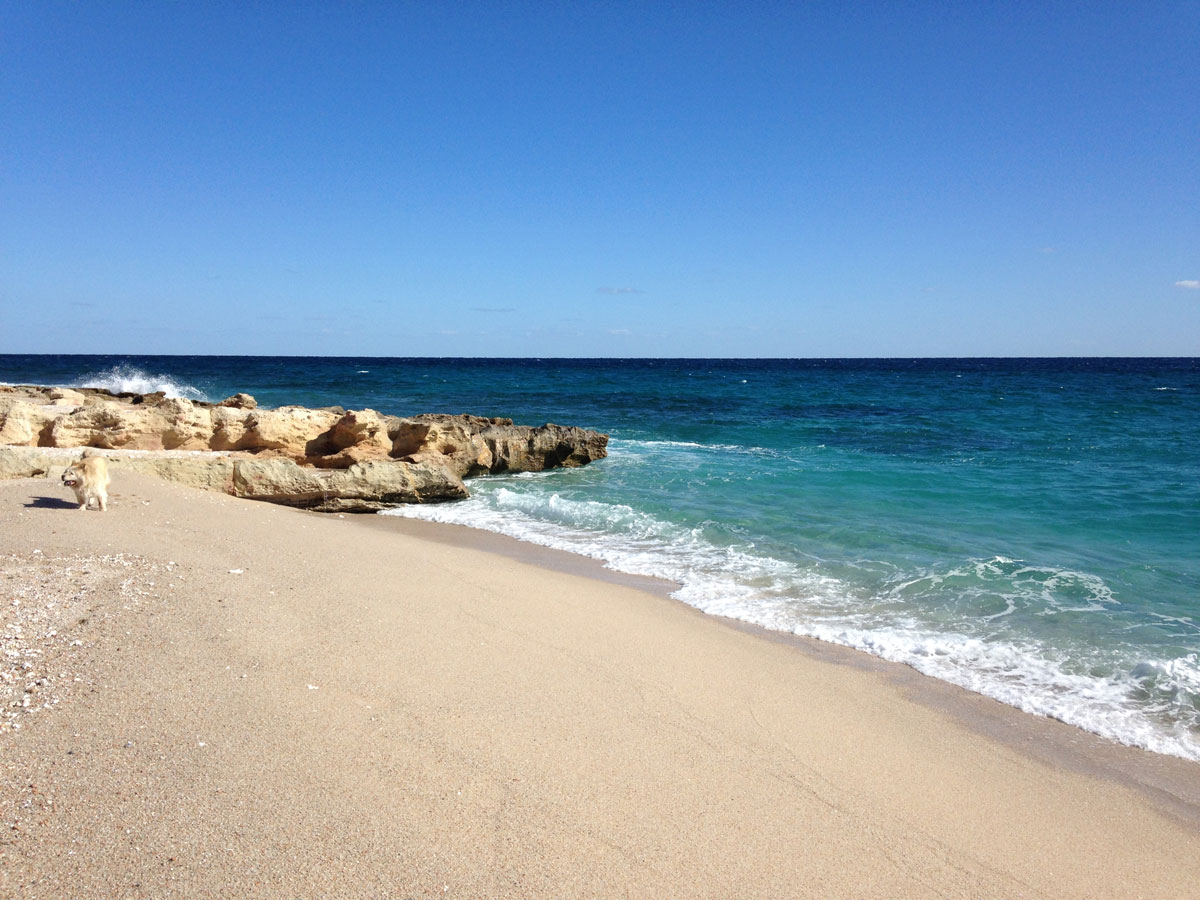
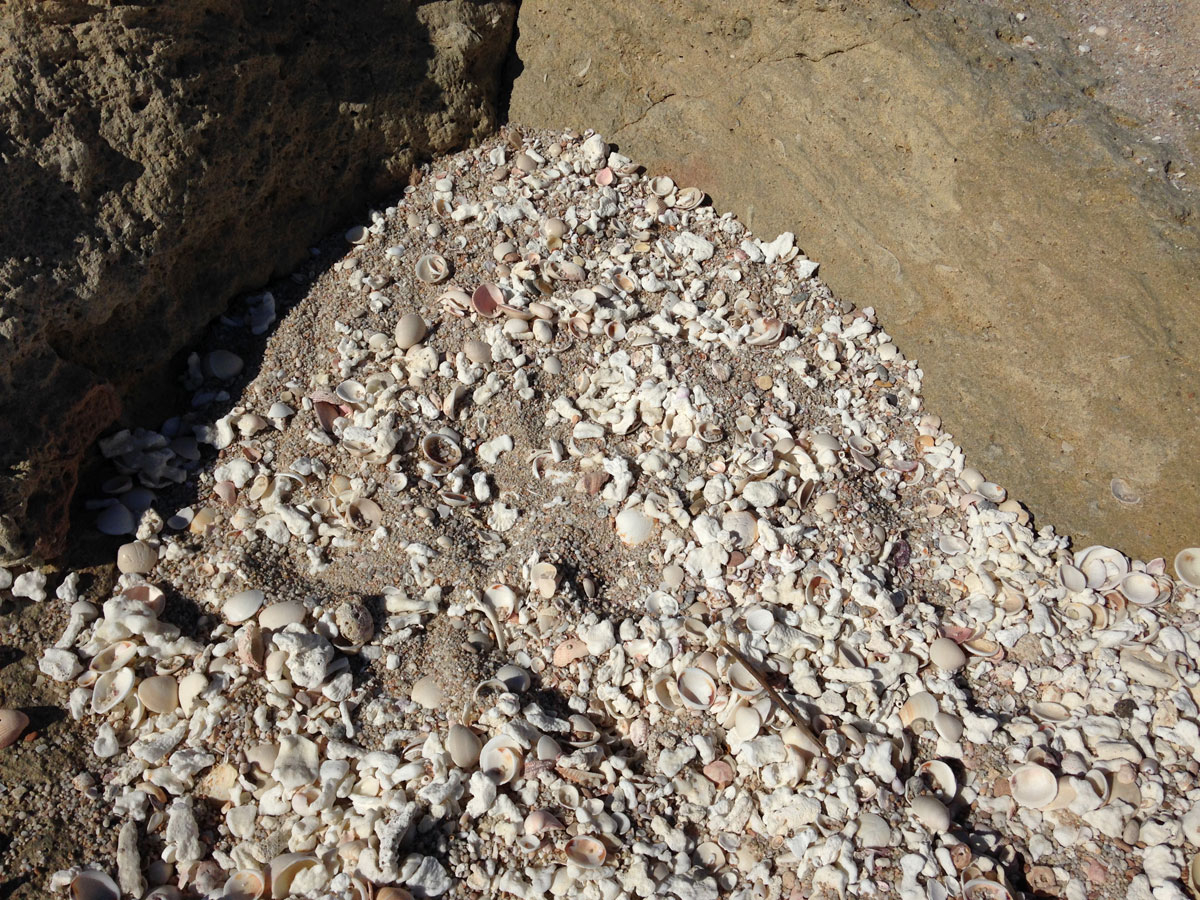
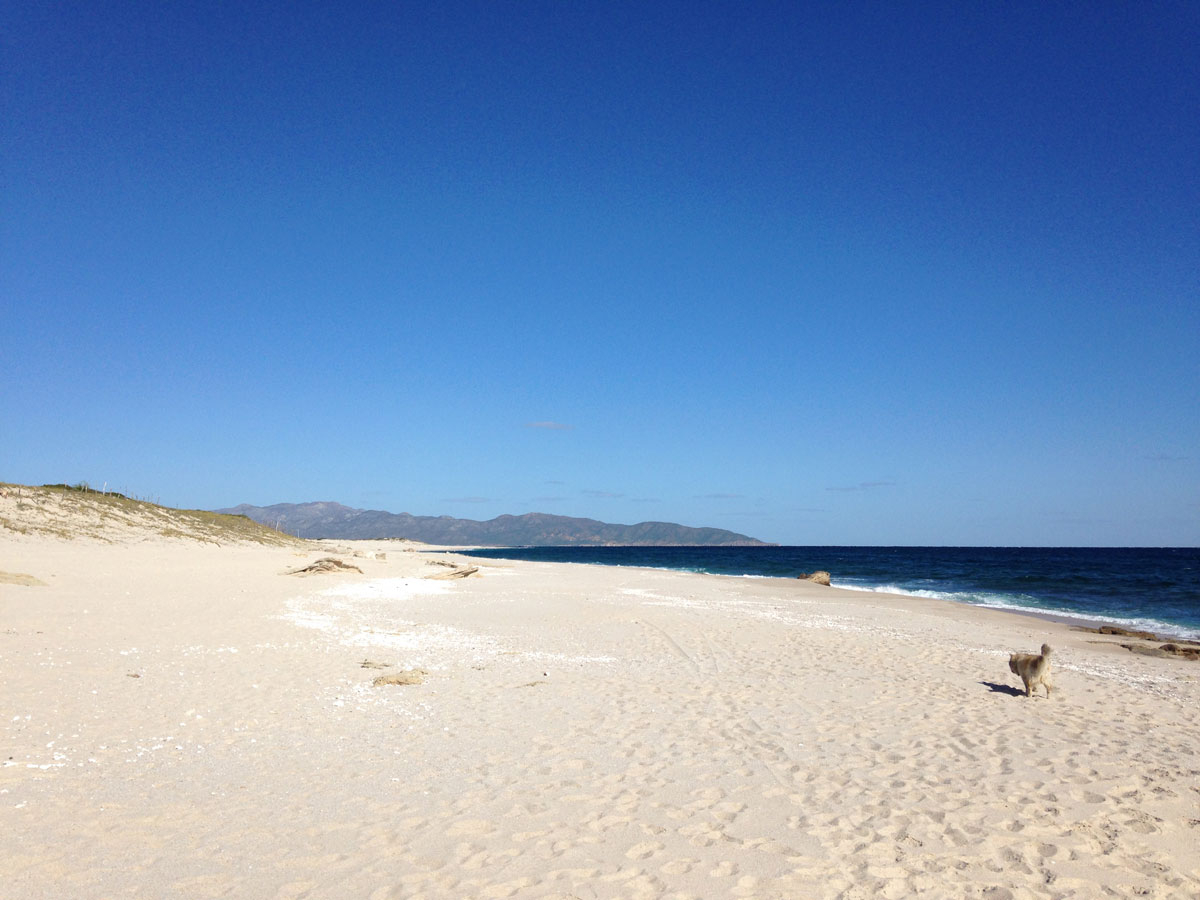
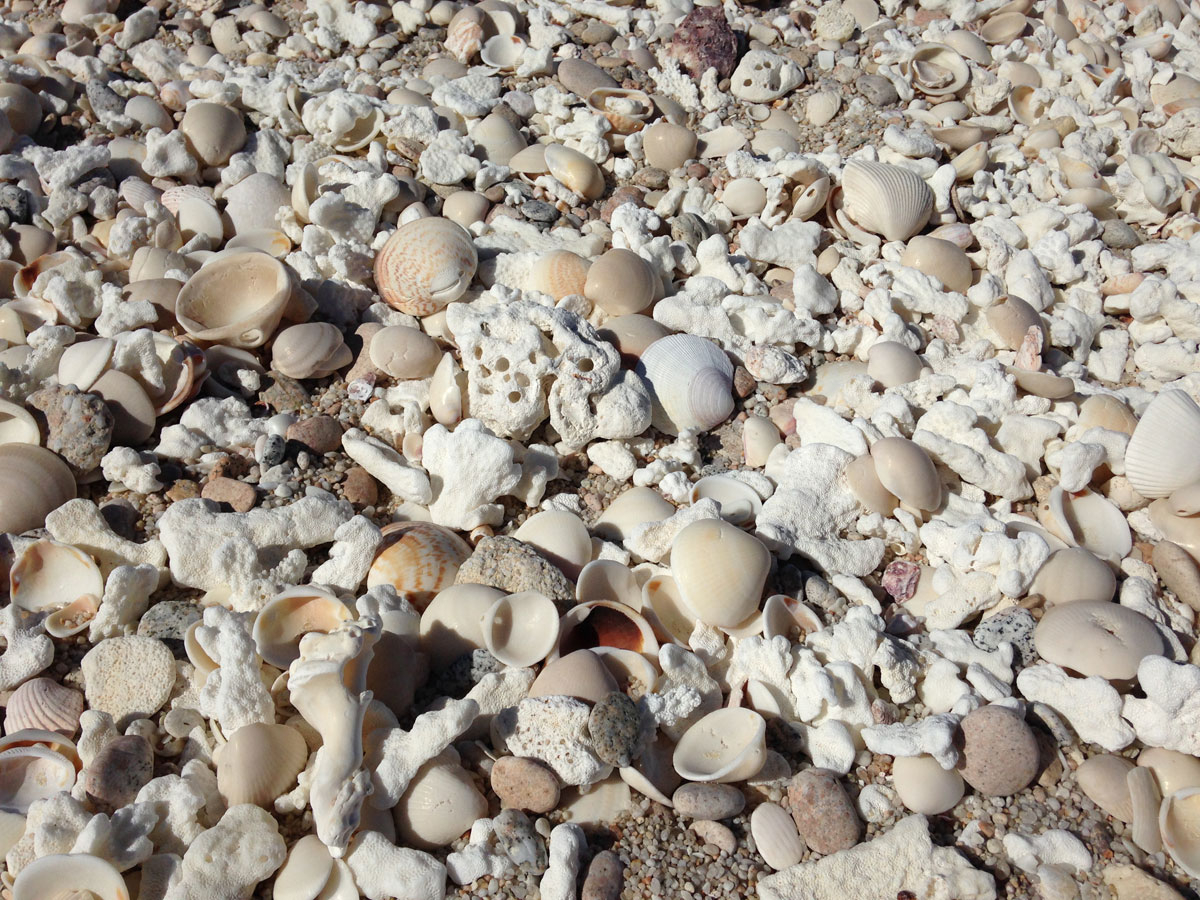
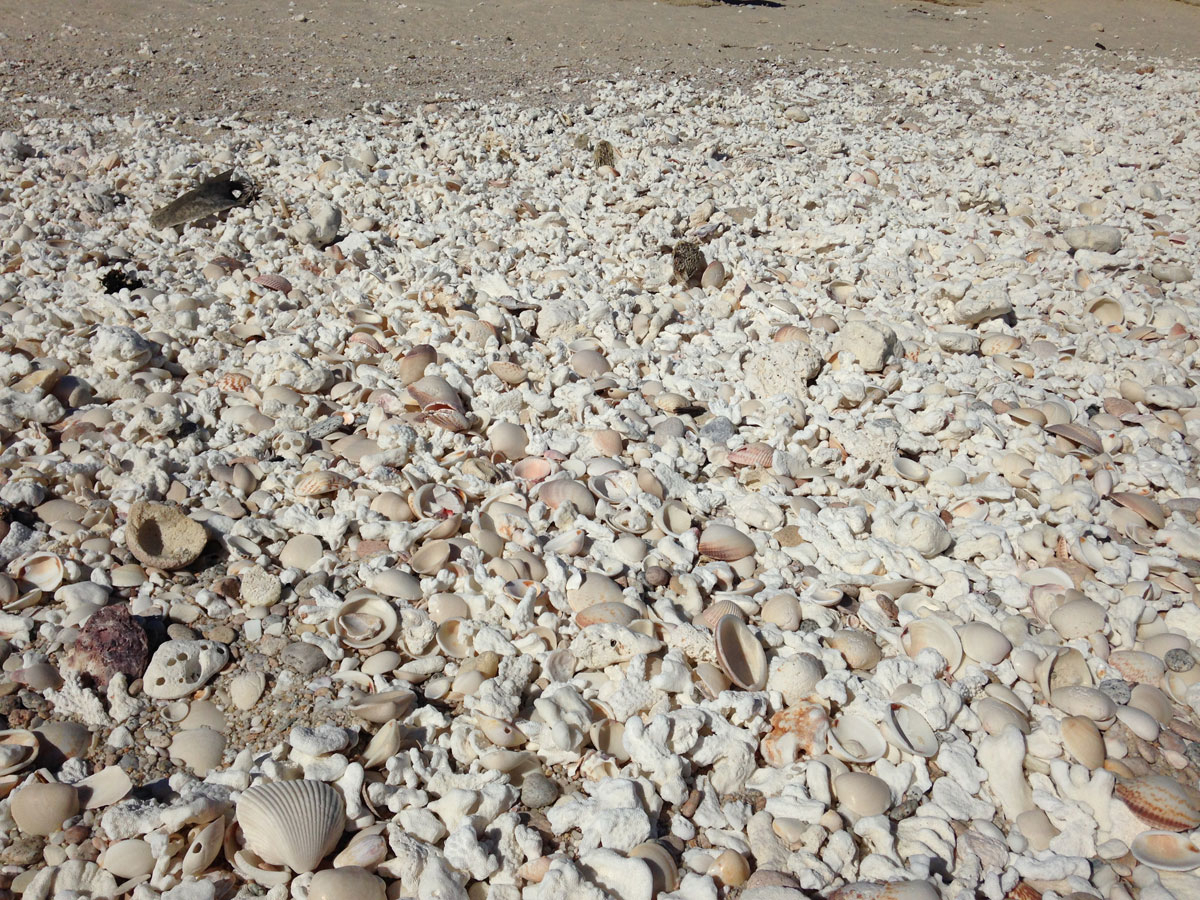
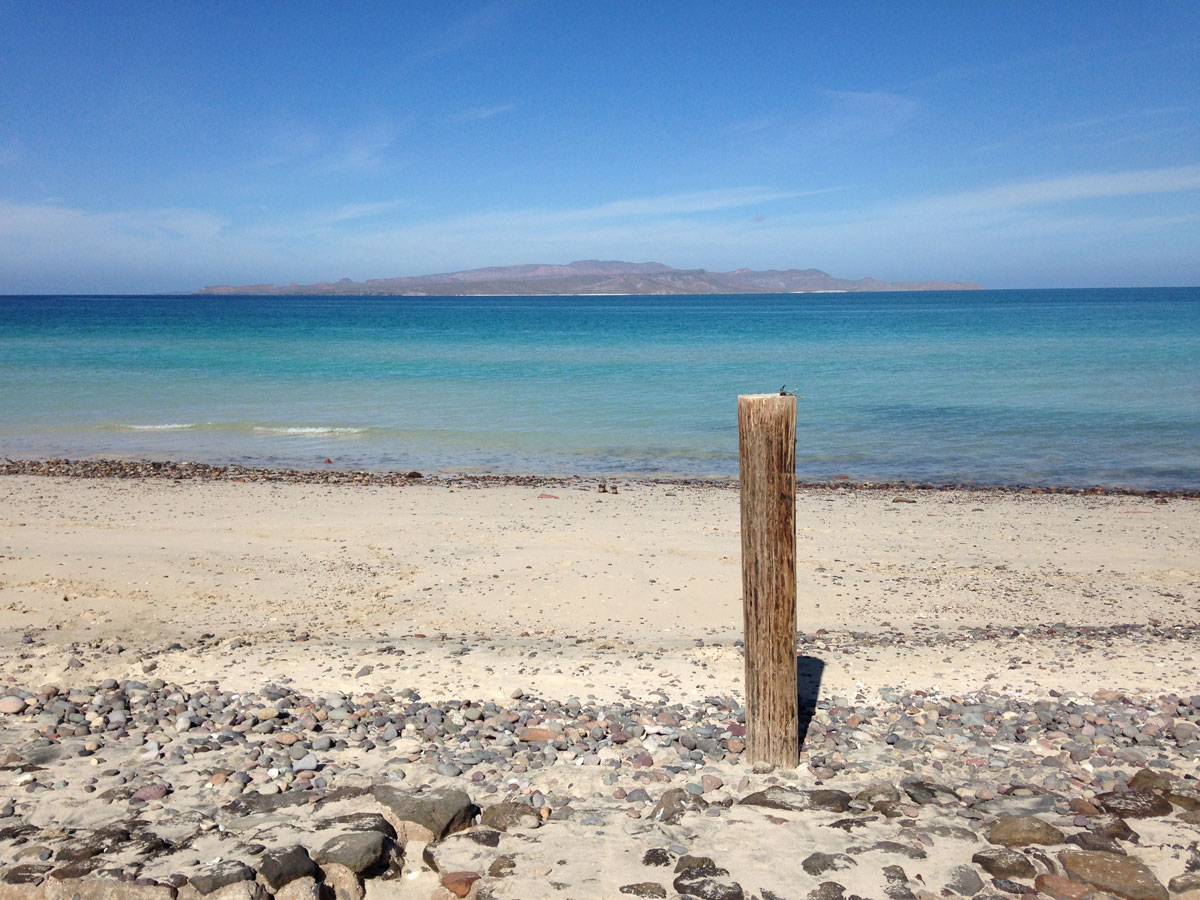
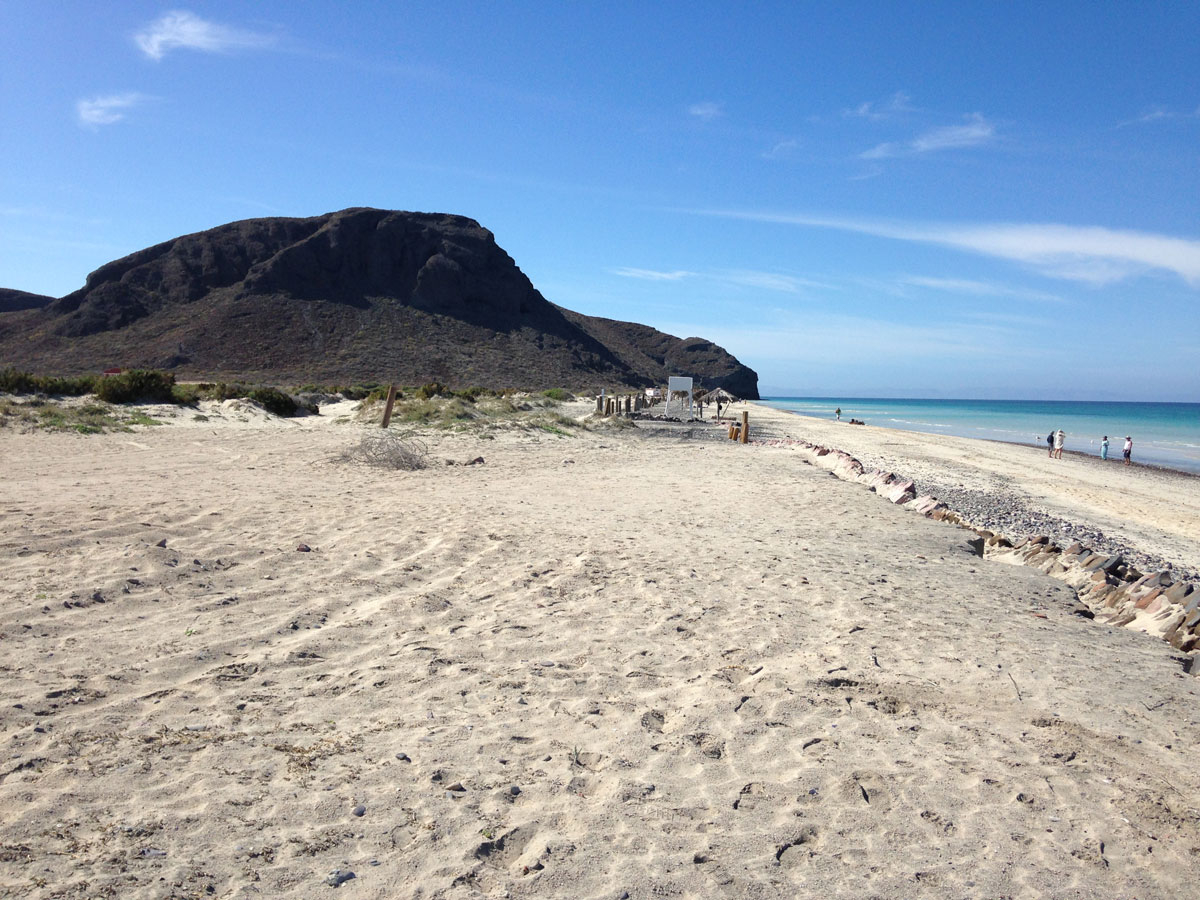
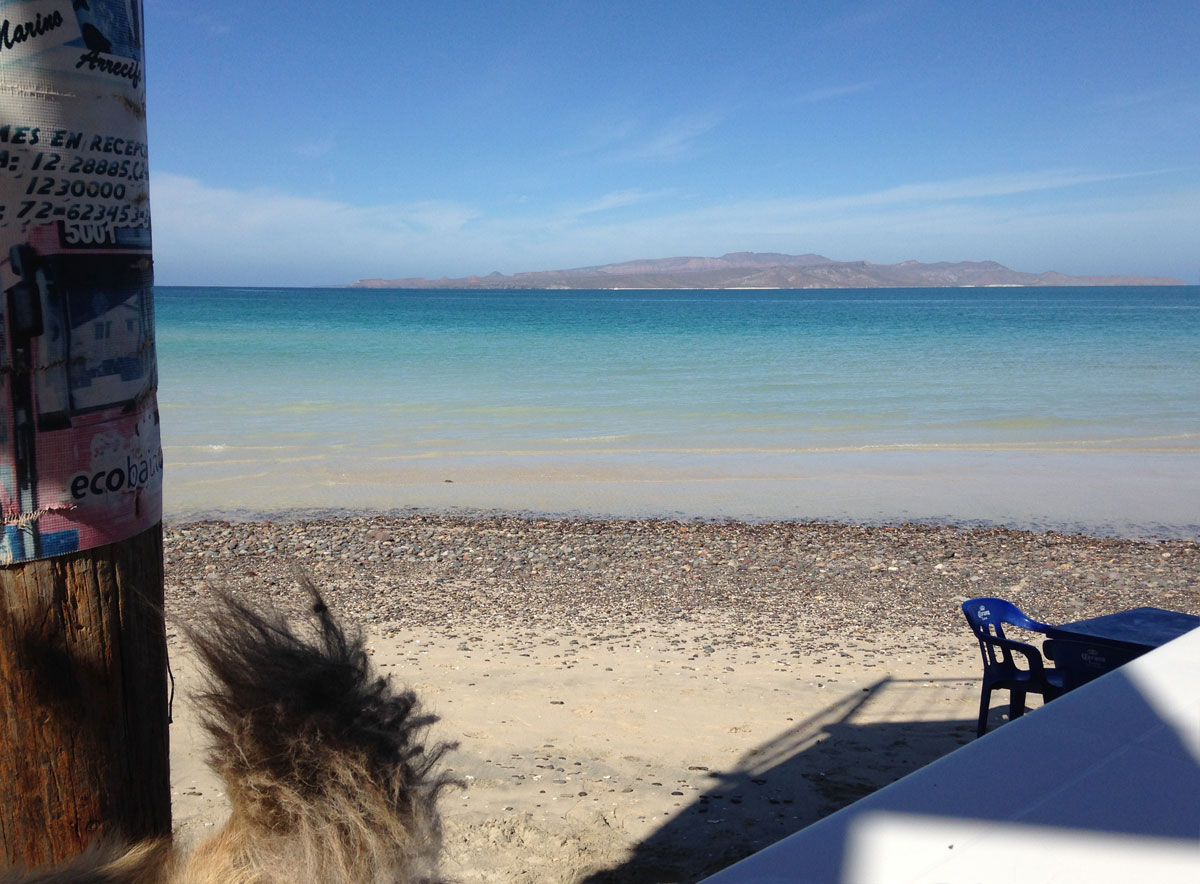
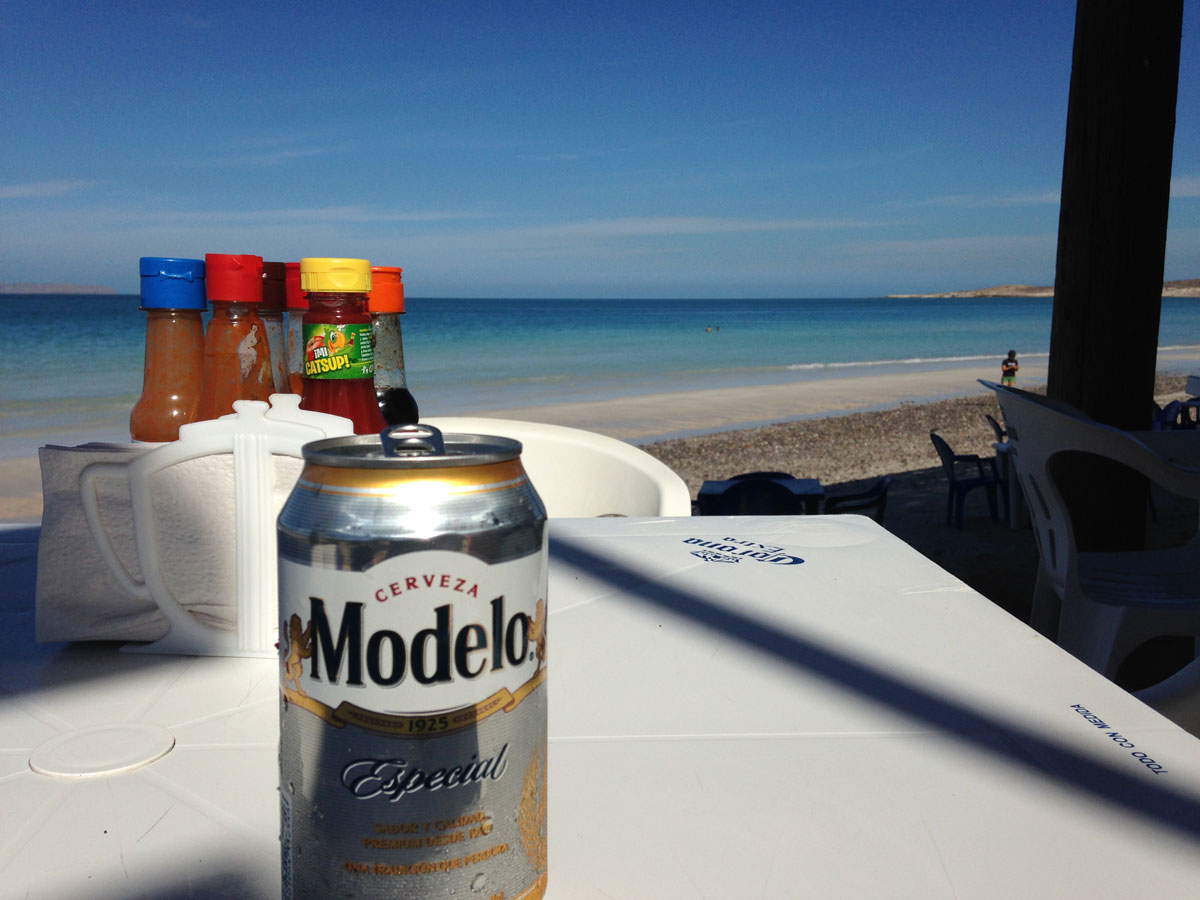
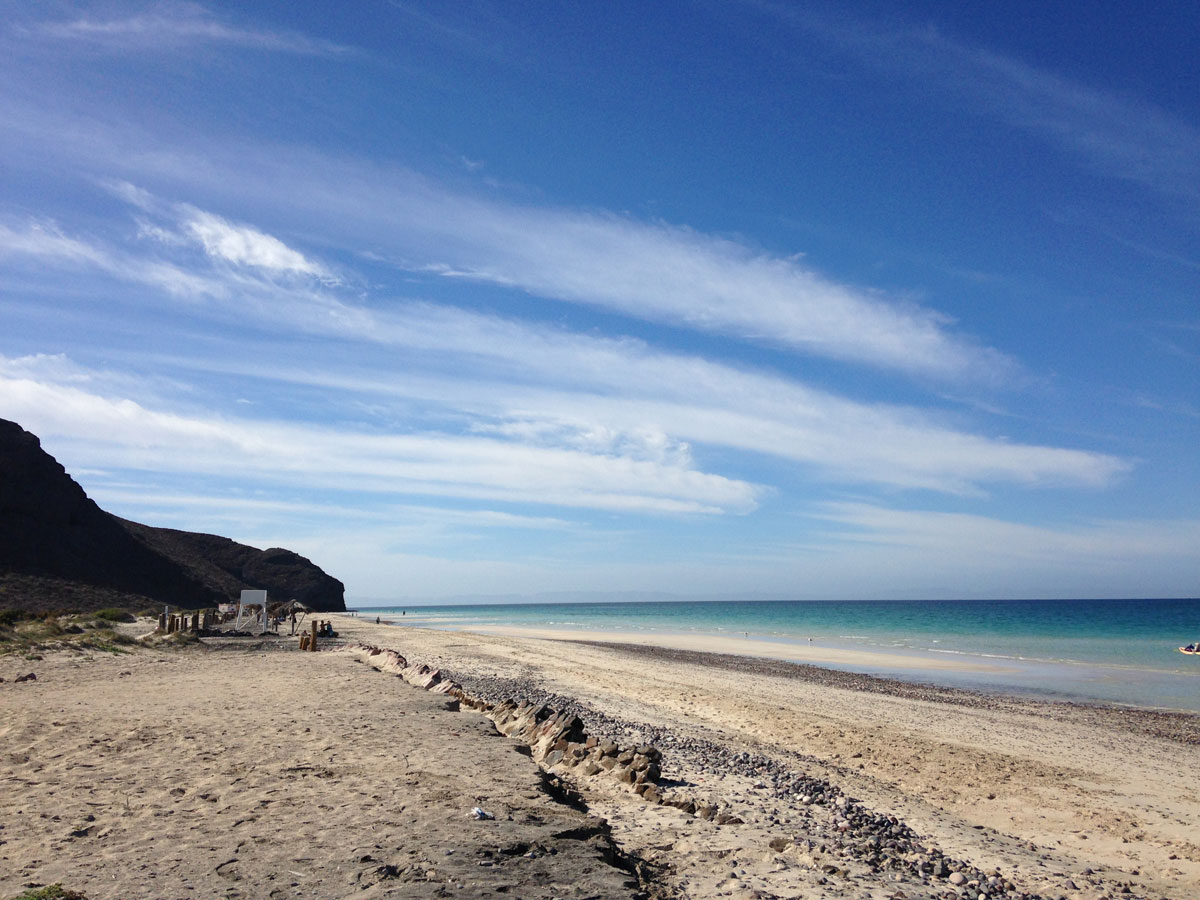
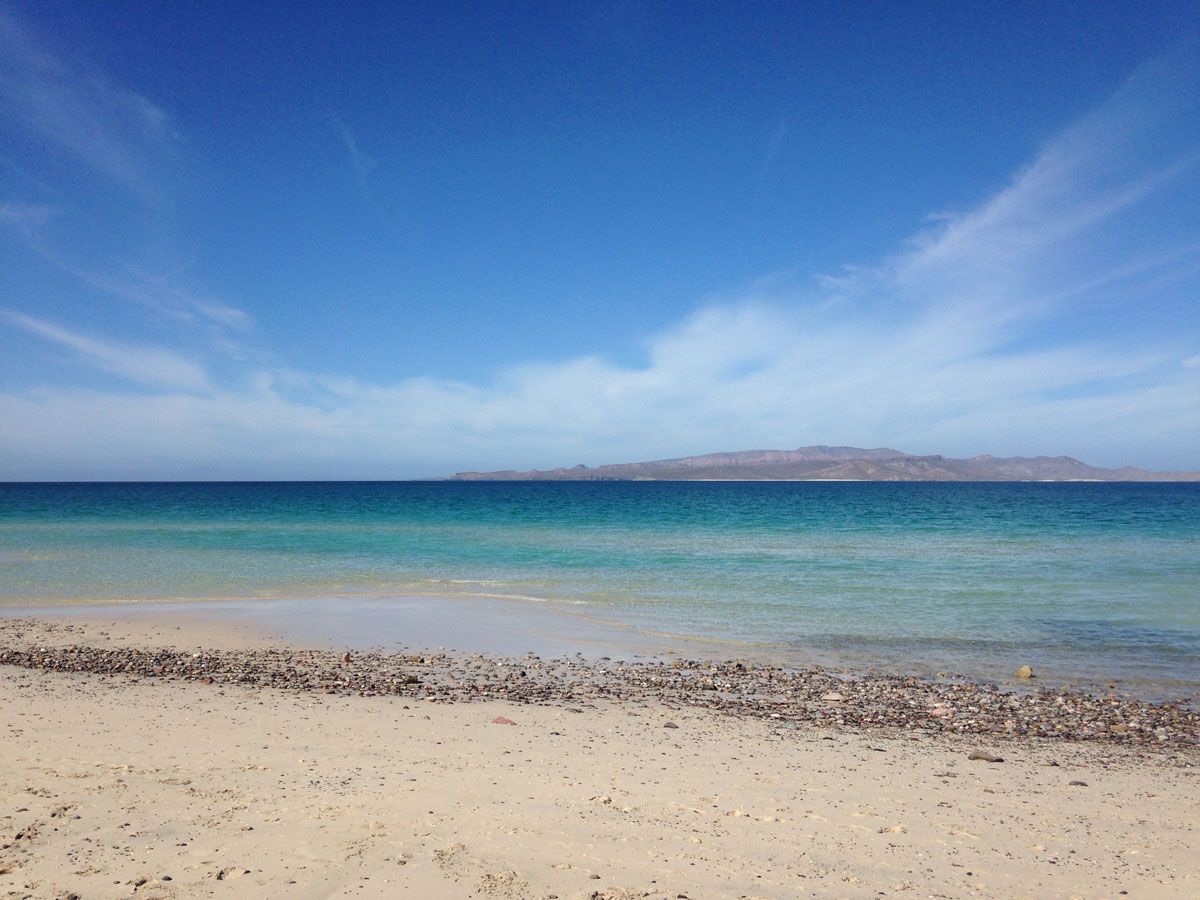
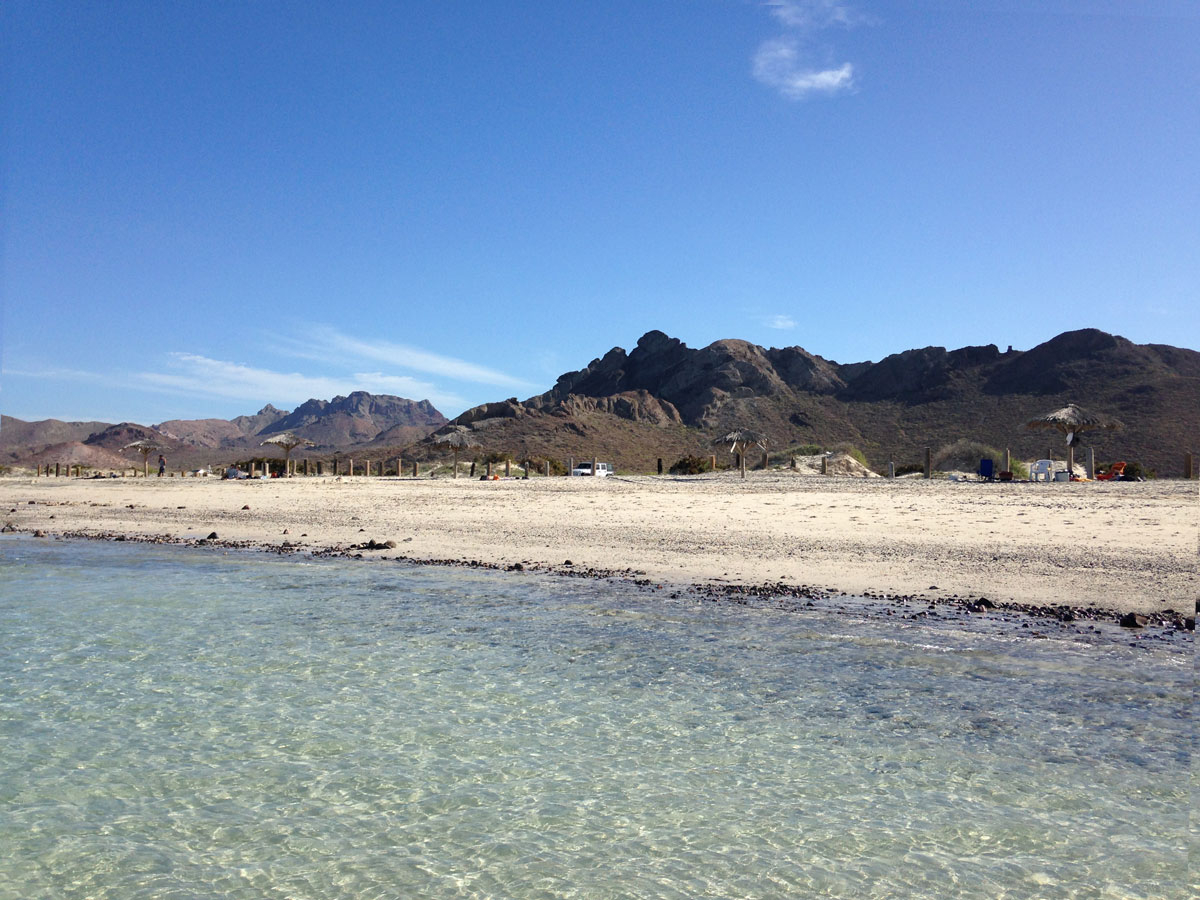
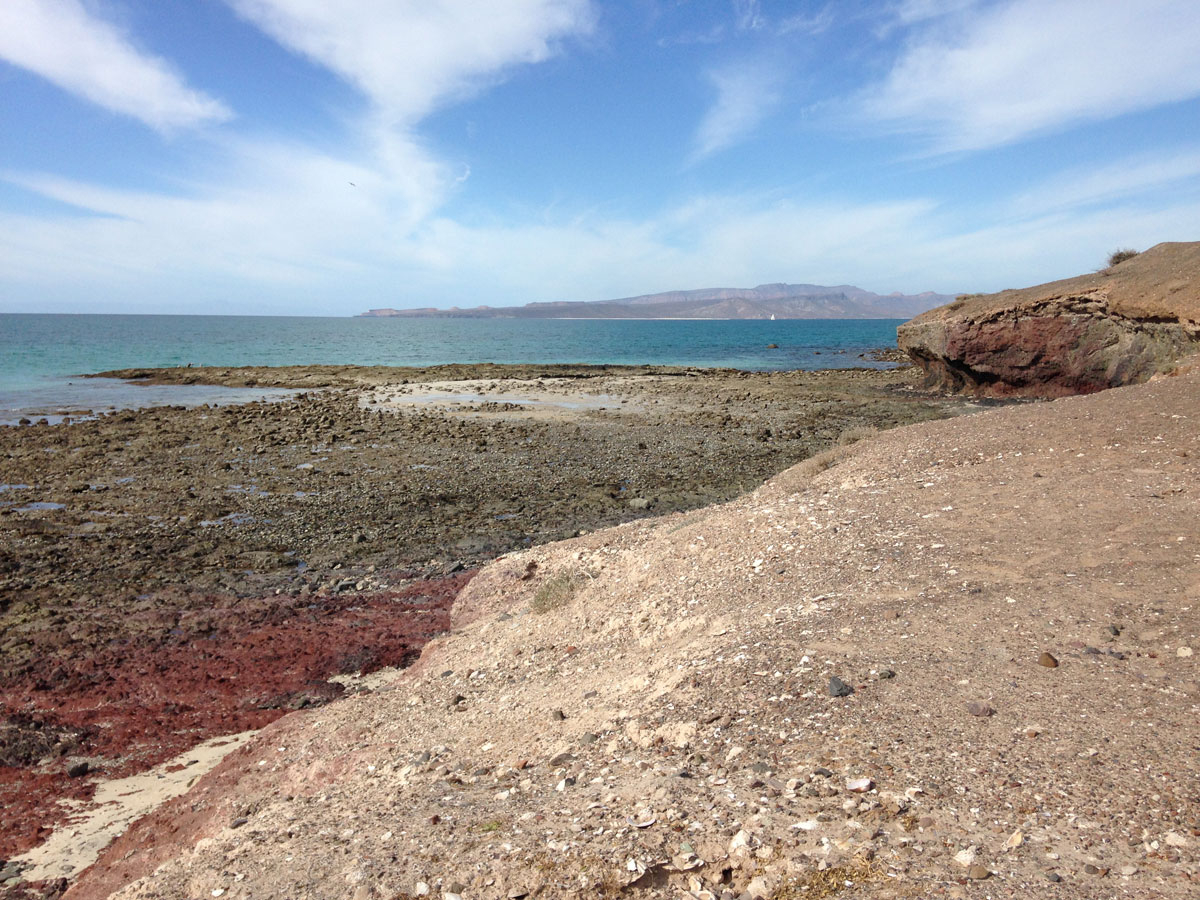
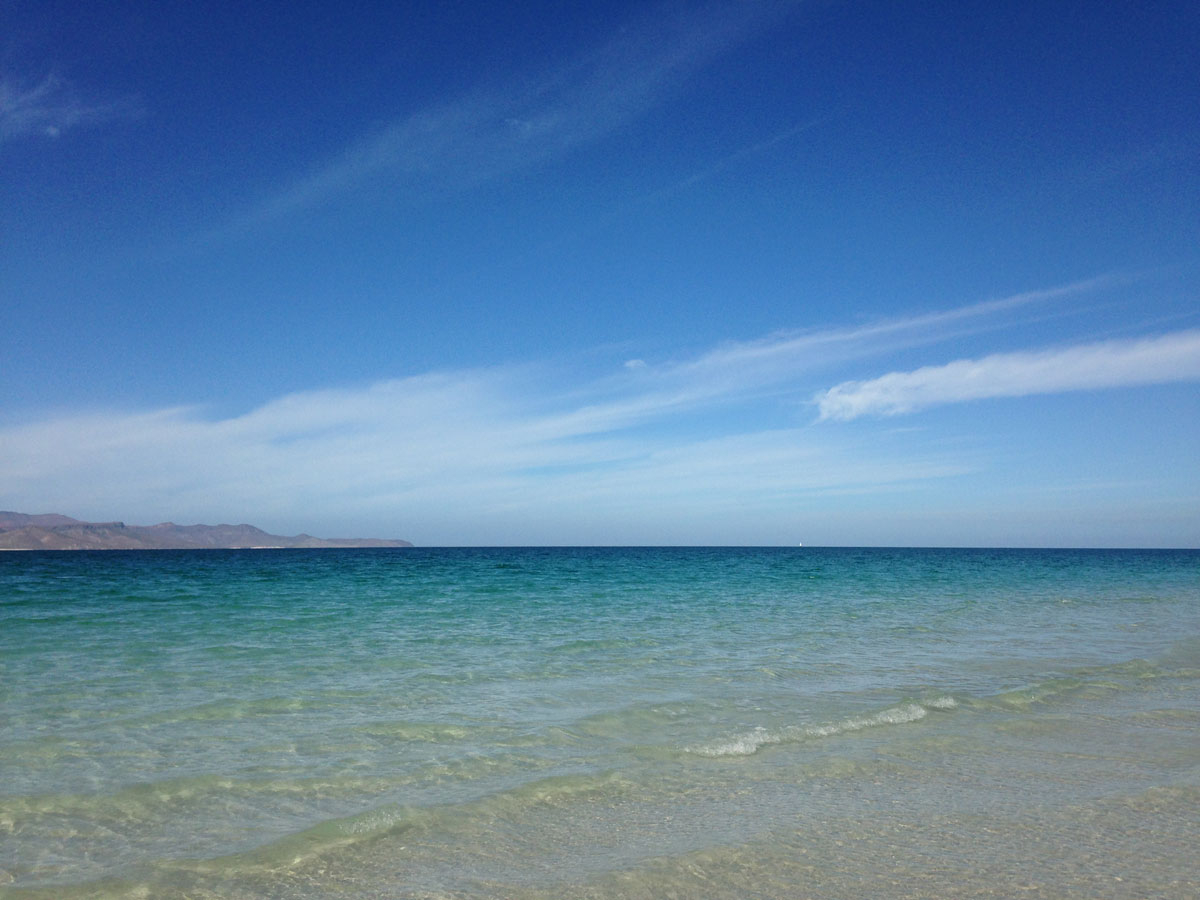
The highway itself terminates at a private resort, but about 1 km before that, there is a sign for a public access beach. So I went thataway down a washboard road. Saw a group of vultures fighting over a dead rabbit, and amongst them was a caracara. About 3 km later there was a much smaller hotel/resort next to a very modest looking entrance to the public beach. By “modest,” I mean a hole in the fence next to a large pile of garbage. But the beach itself was absolutely beautiful. Not another person there (possibly because the day was, and is, cool and breezy). White sand clotted with reefs of seashells and coral at the tide line. Sasha had a blast just running up and down and getting wet in the surf, and I couldn’t resist picking up a few shells.

Drove back the same way, but the hike will have to wait until another day since I picked up a hitchhiker. He spoke about as much English as I do Spanish, but it did come out (I think), that he is a fisherman, has no kids, has five female dogs, and he thinks the best way for me to improve my Spanish would be a strategic liaison with a Mexicana.
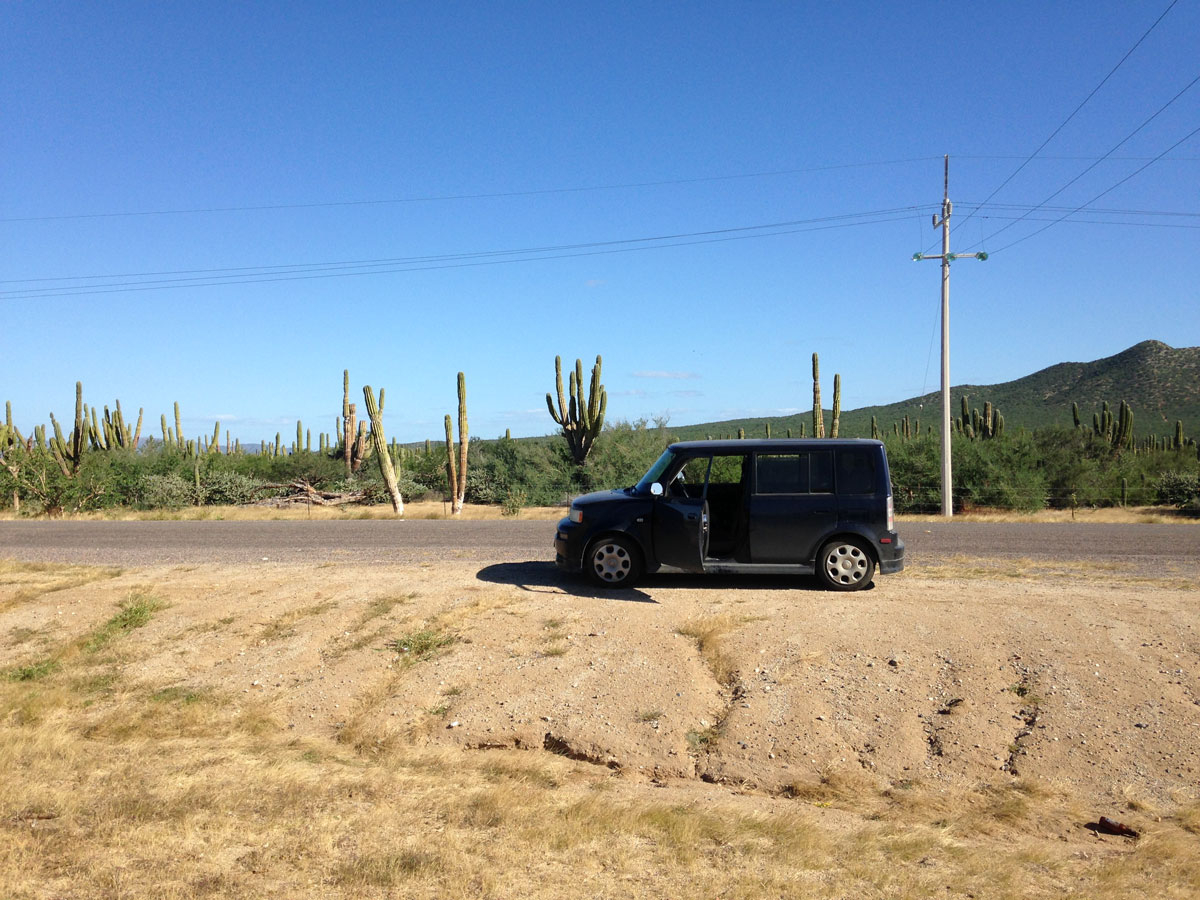
Feliz Navidad!

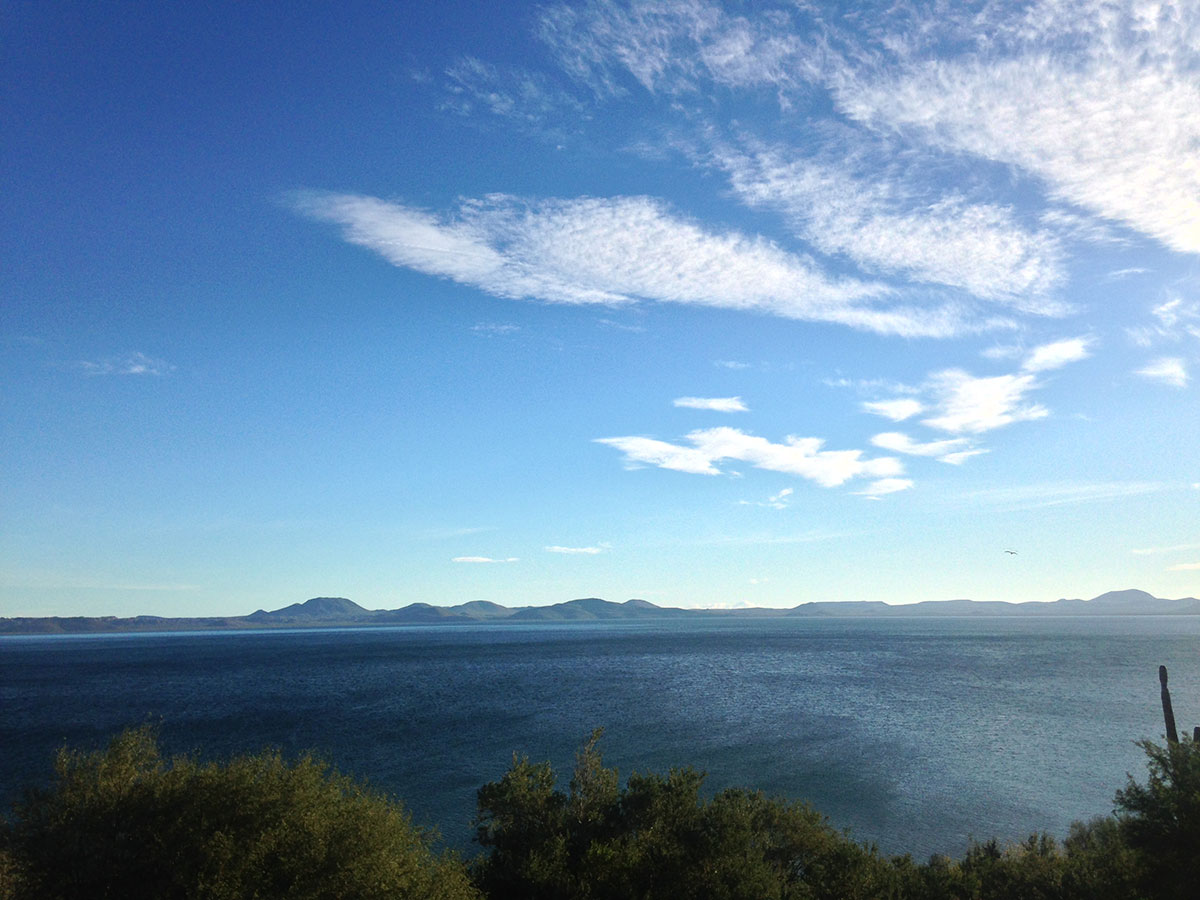
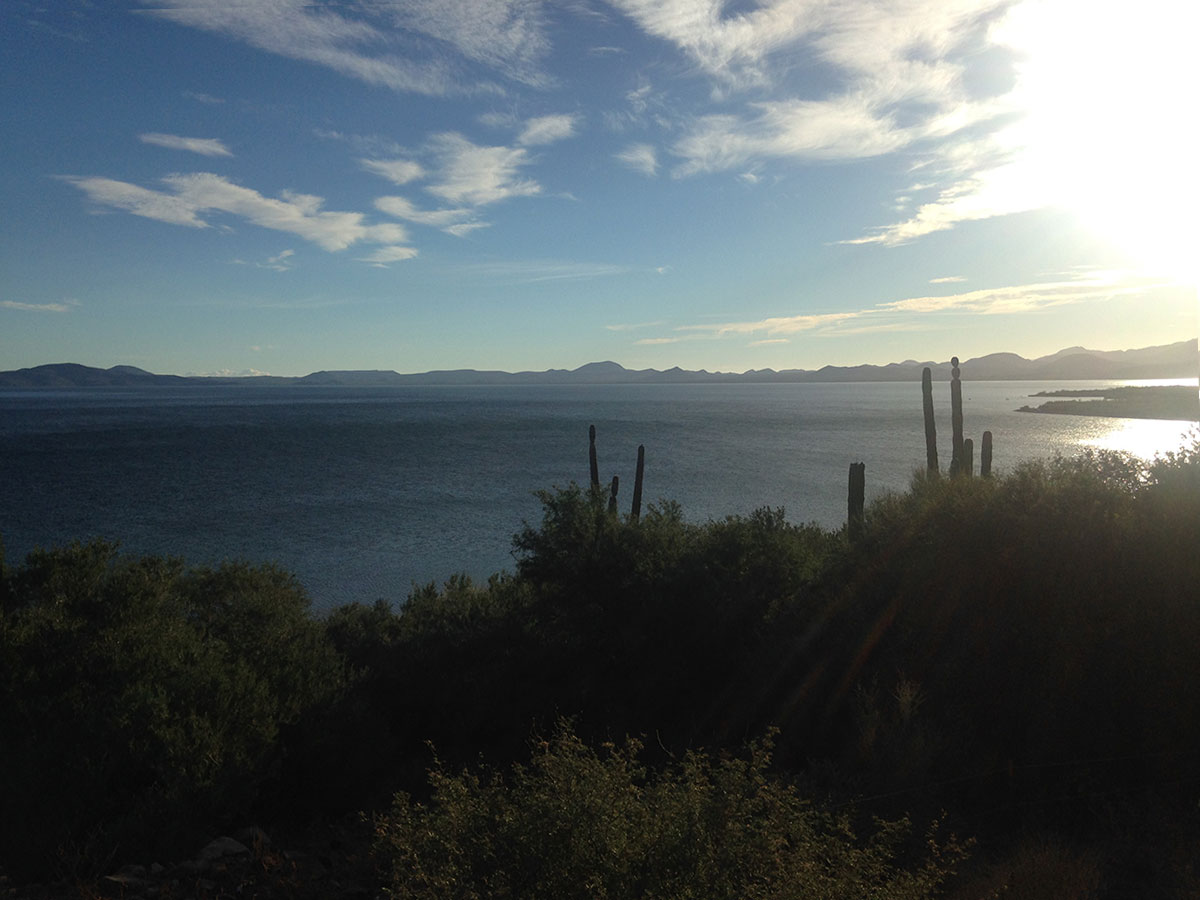
I’m going to rapidly run out of interest in writing this stuff, but hopefully will keep posting images for a while. These pics are from my morning walk and then later, a trip out to Playa Tepolote Tecolote, a beach at the end of the peninsula on which La Paz is located. The sailboat that’s in two of the pictures is heading southwest, toward La Paz, through the strait between Isla Espiritu Santo (behind it in the second pic) and the main Baja peninsula. Note to Banks (and maybe Betsy, too), that’s the strait we’ll use to do the offshore delivery. With any luck, we’ll pass some whale sharks on the way out or the way back in.
Sasha has been frustrating me today by refusing to gambol on cue. She was twirling around chasing her tail this morning before we left on our walk but as soon as I got the video going, she just came up and stuck her nose in the camera. Same out at the beach–she was frolicing–and I do mean frolicing–in the water like a puppy until I turned on the camera. I’ll keep trying.


Day Four: Here I Am in La Paz

And I love it so far.

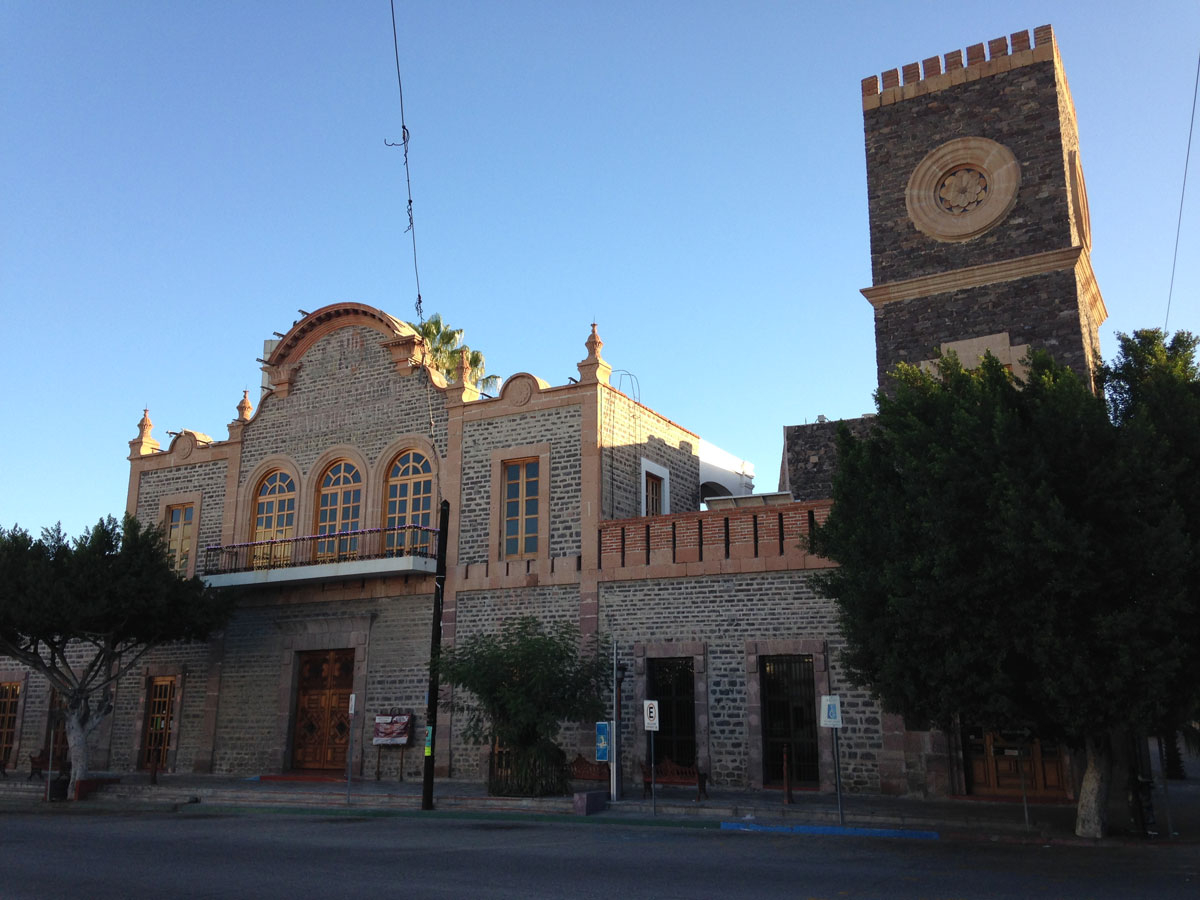
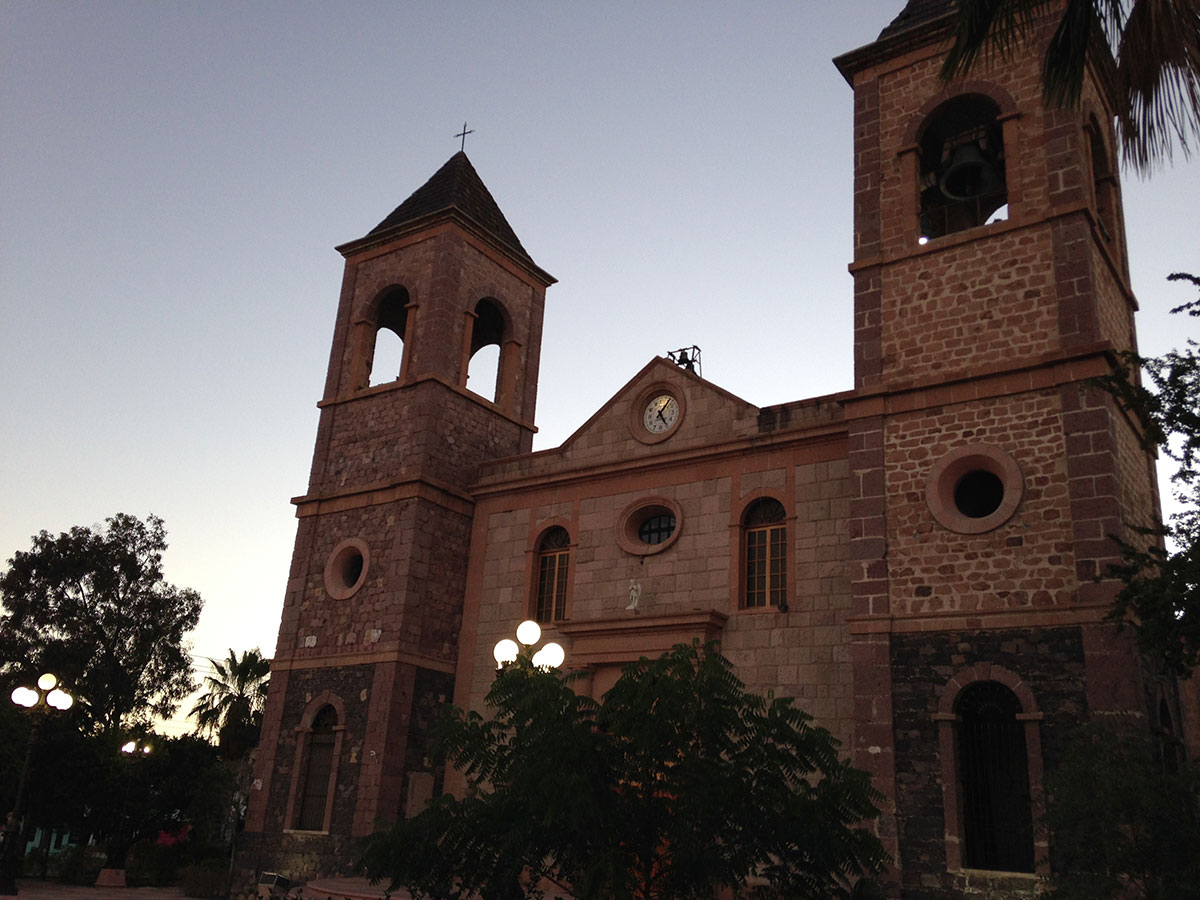
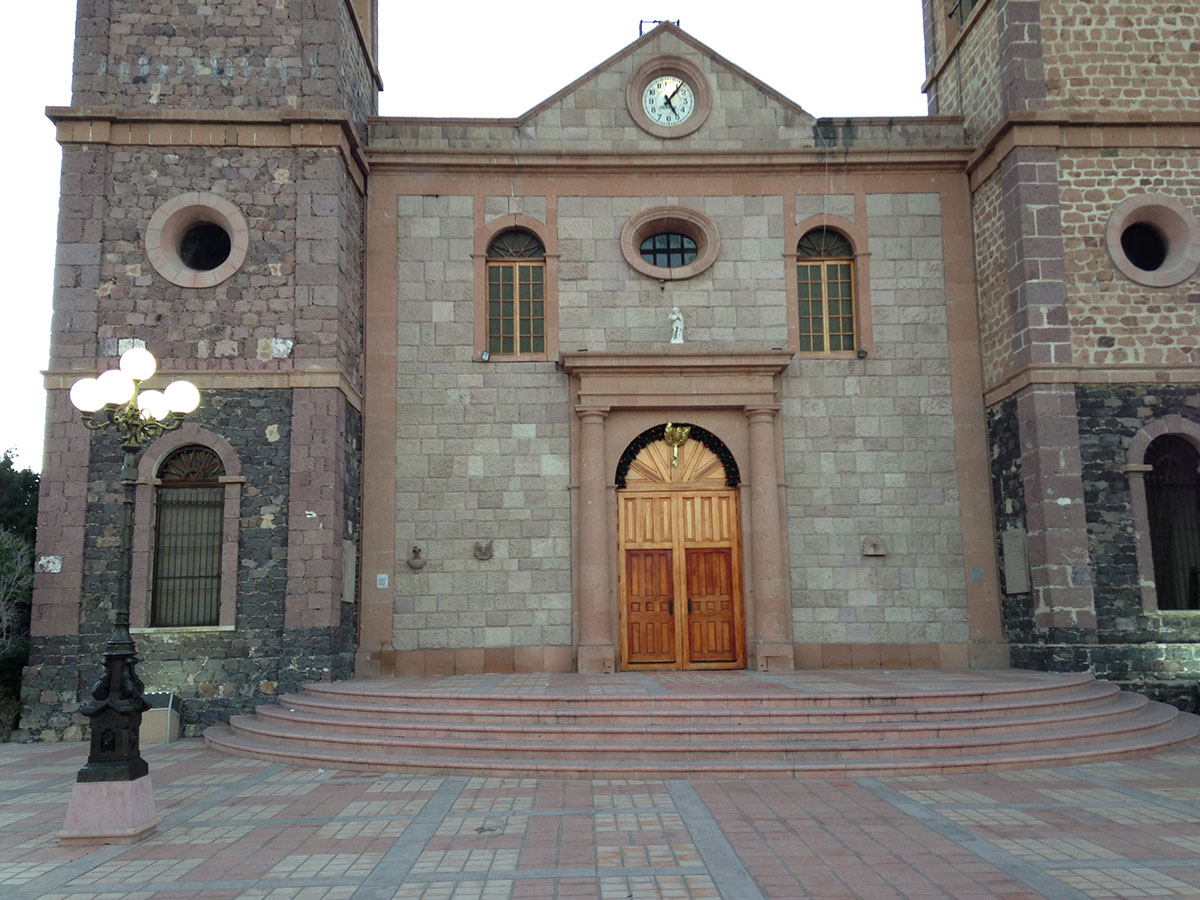
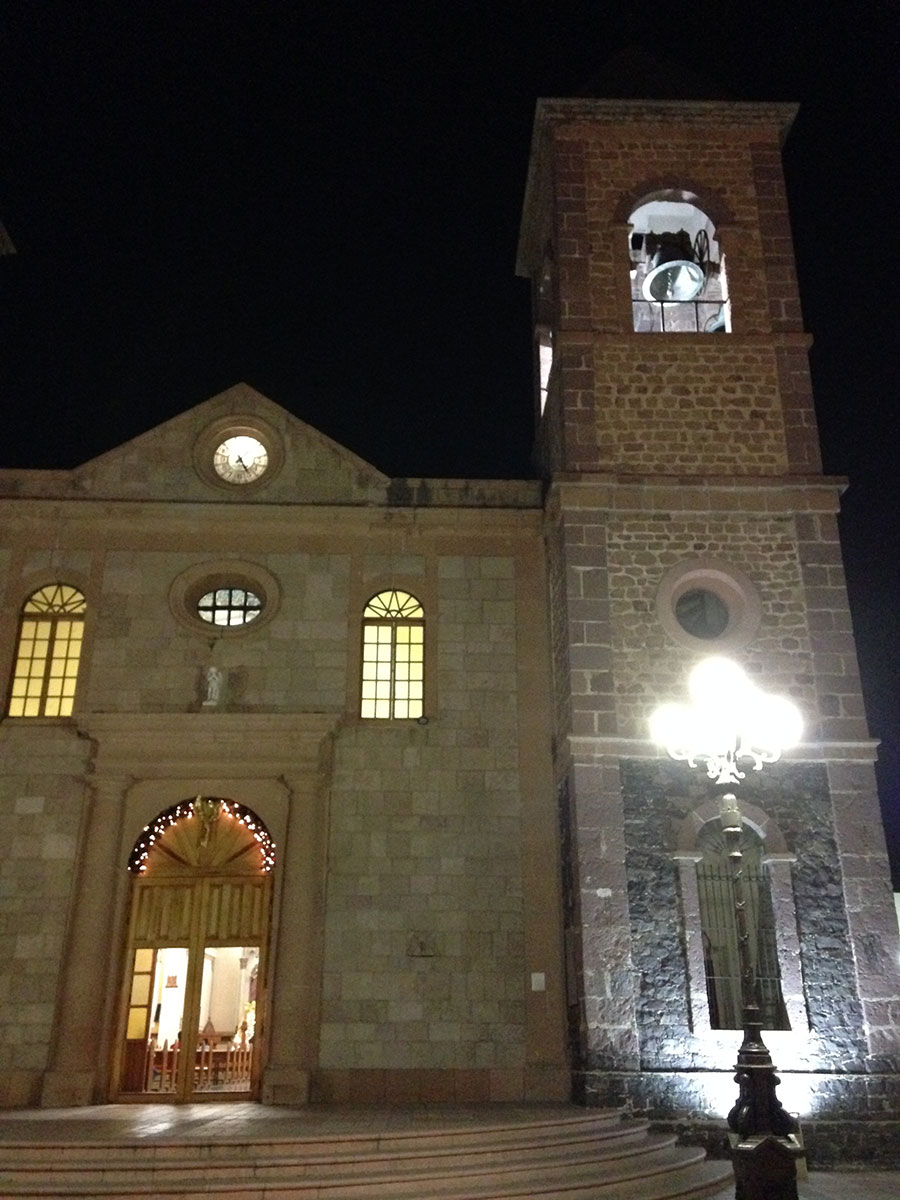
Catedral de Nuestra Señora de La Paz

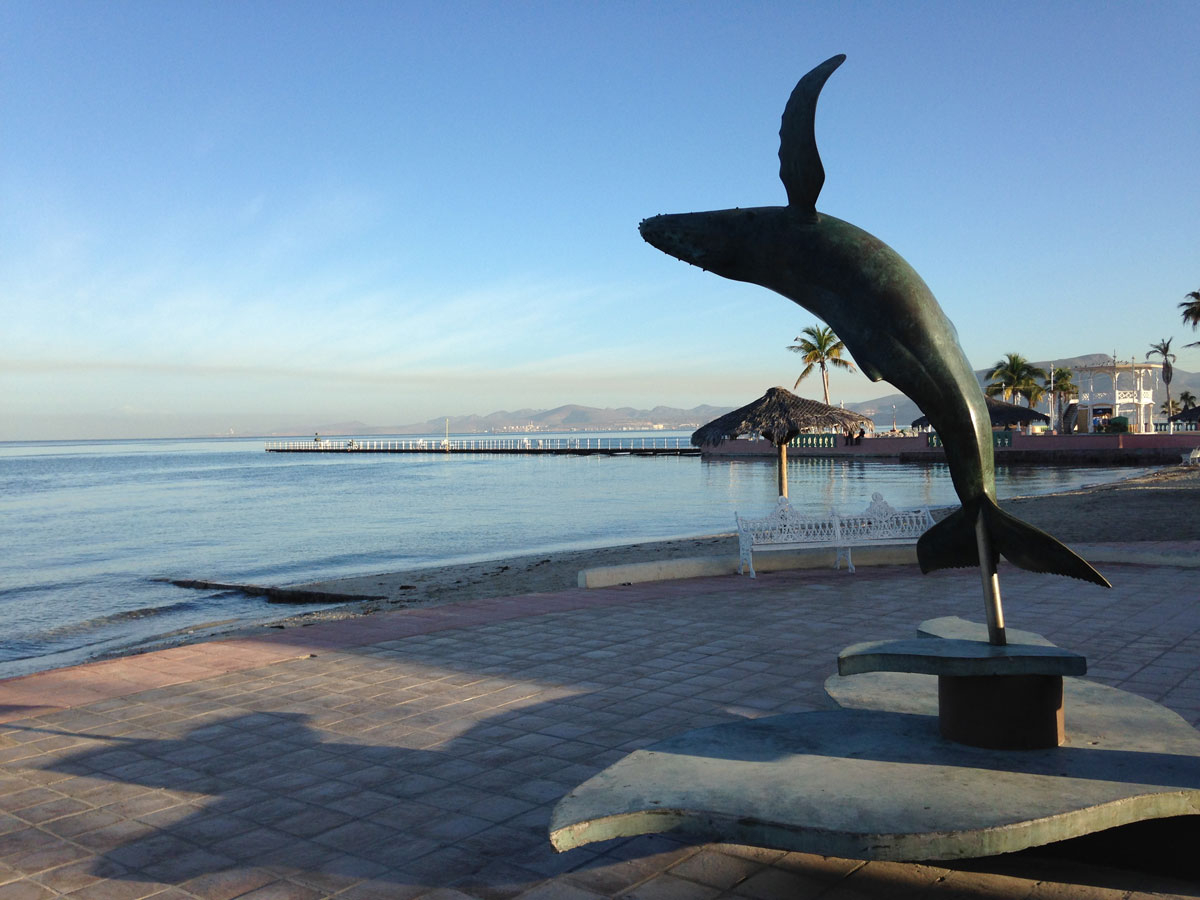
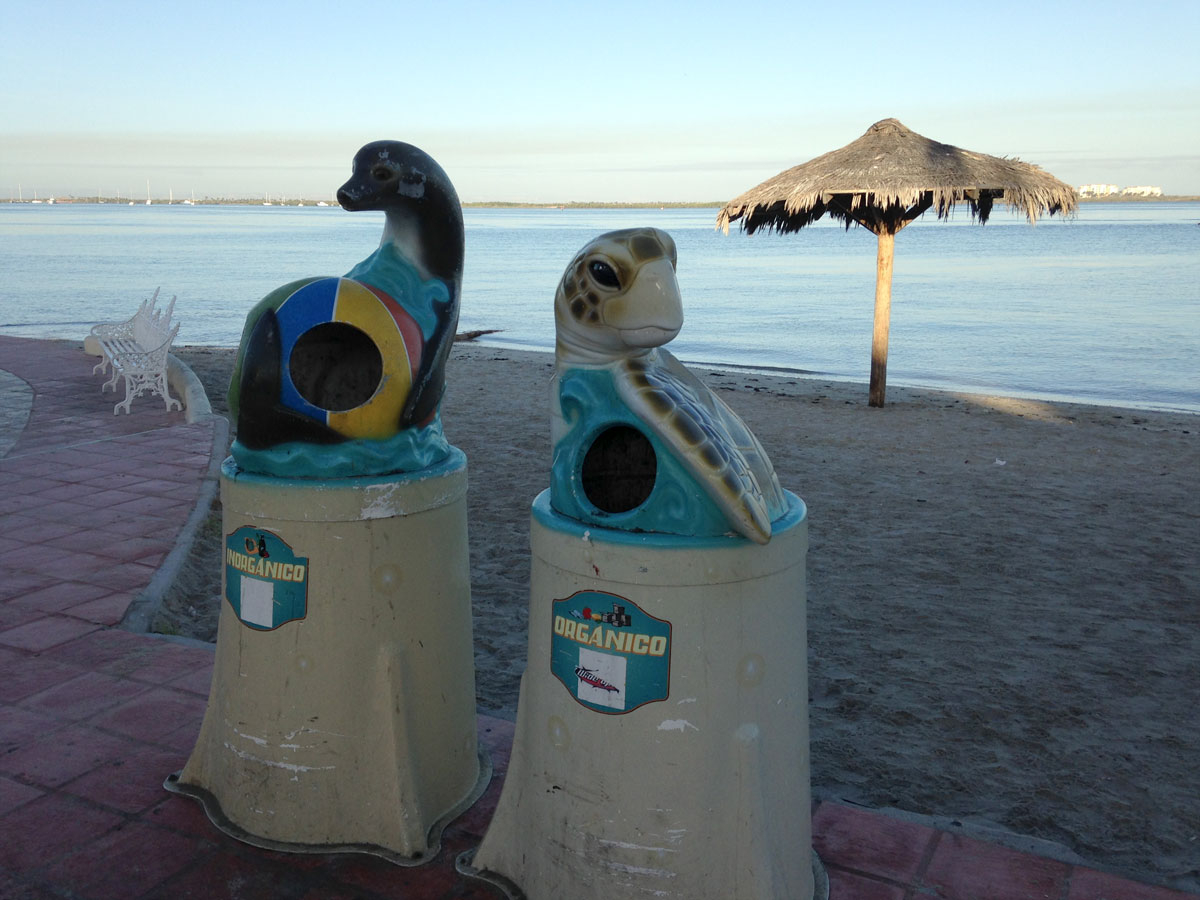
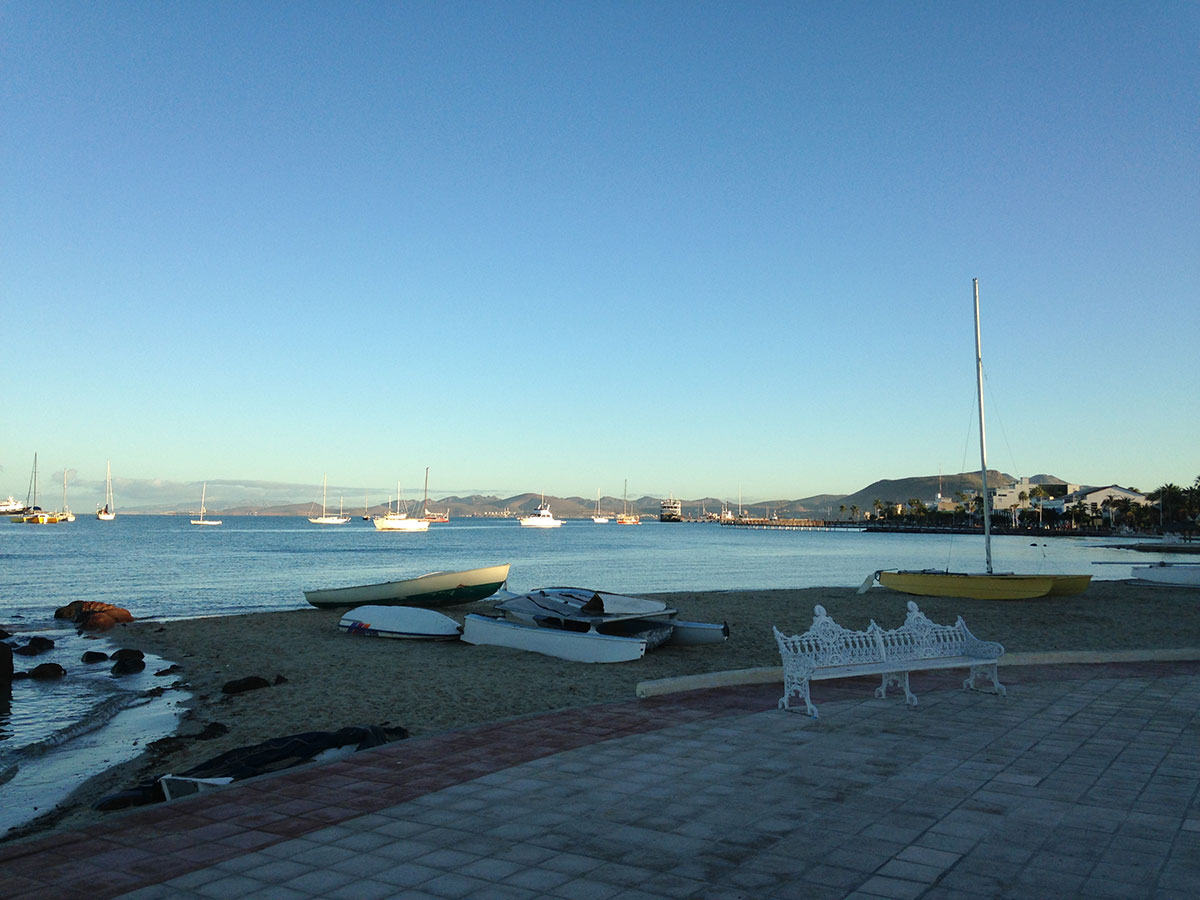
Sasha and I took a walk as soon as it got light, from Casa Buena down to the main cathedral on Cinco de Mayo street and back–about two miles altogether. She was starting to lag just about the time we got to the cathedral, but then we turned left down to the malecón and the beach perked her right back up. She was pulling on the leash all the way home. As we were walking on the malecón, a Mexican couple walking their dog stopped to pick up after it, so that answered a burning question. Shortly after that, Sasha did her business and I felt comfortable (huh, this sounds weird) picking it up afterwards. I deposited it in the “Organic” trash bin–the one with the head of a sea turtle.

old-man-and-the-sea-text

old-man-and-the-sea It’s me!

malecon-1 malecon-at-anchor

Got home and worked on setting this blog up until I got hungry, then went out looking for food. Got some very forgettable fried chicken–cross that shop off the list. Later I dragged Sasha back into the car for a visit to the supermarket and then a circuit of the city. Learned a couple of things about driving here, although there’s obviously more to learn. One: Rolling stops are de rigueur. Look both ways and go, bro, or get rear-ended. Two: If you see someone trying to enter traffic from a side street, you stop and let them in. So fucking awesome.

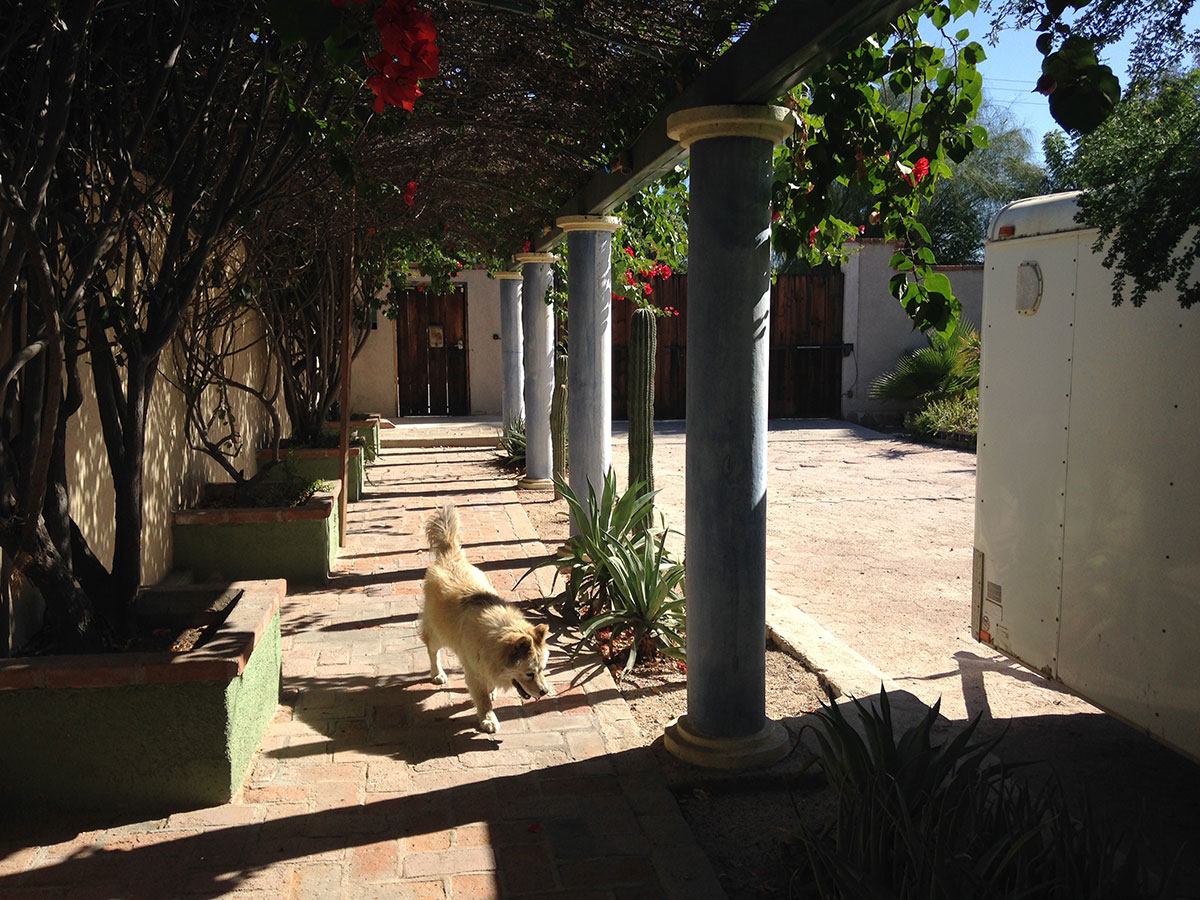
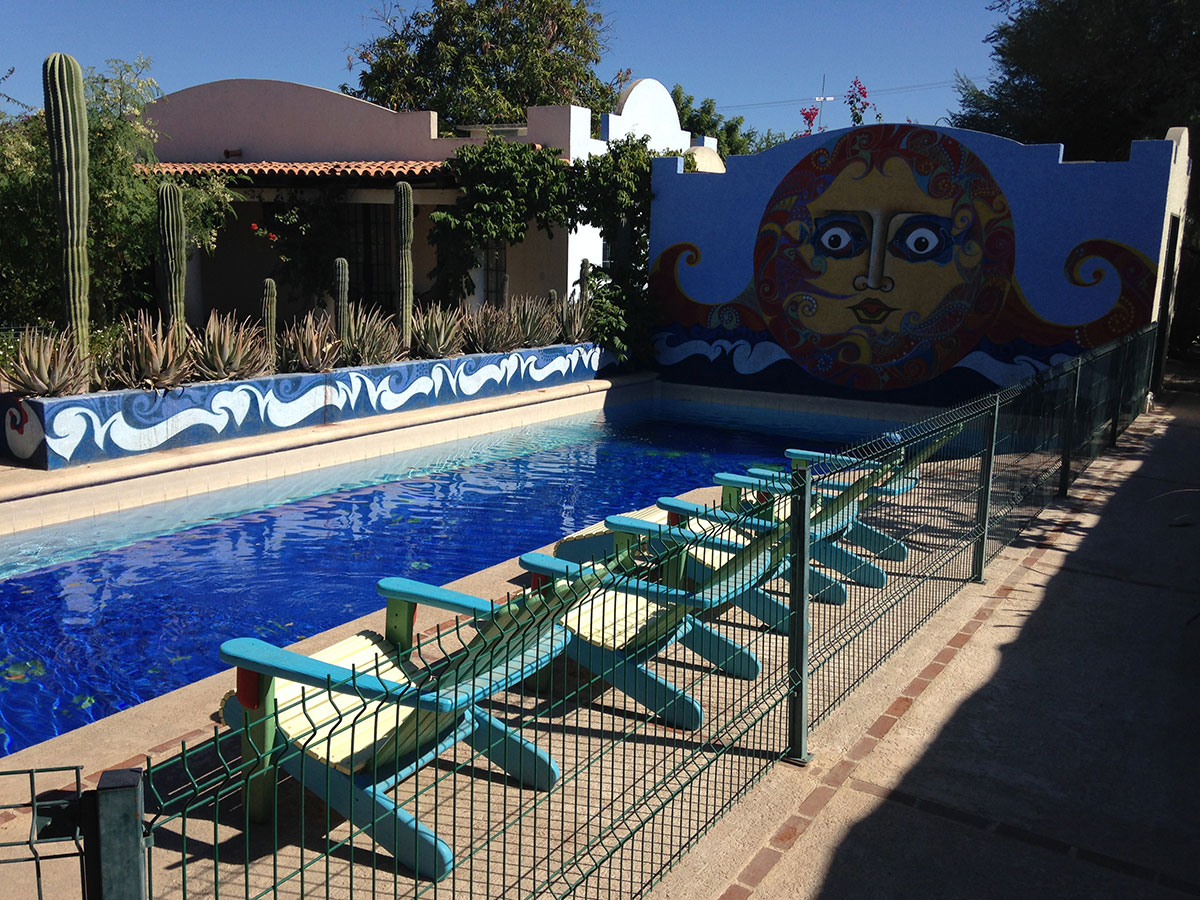
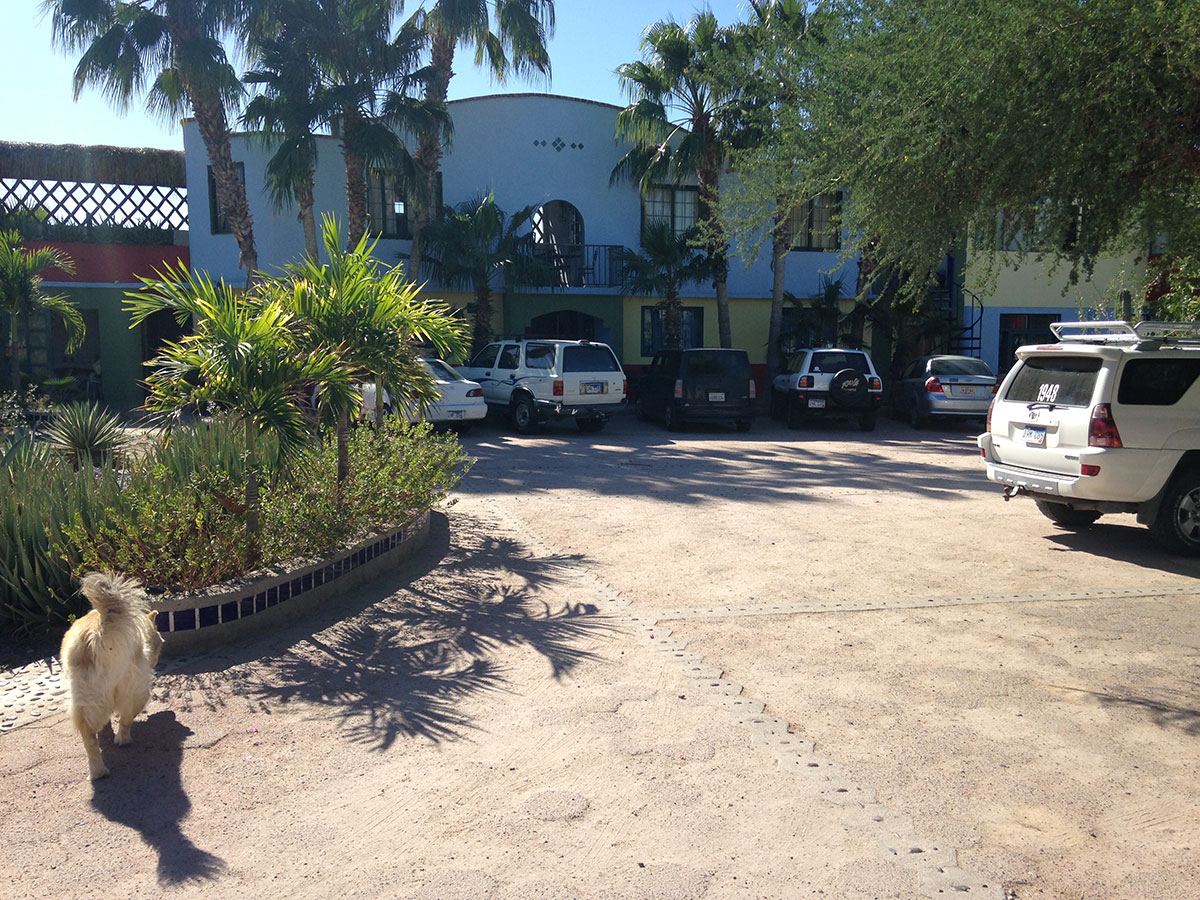
Going to go out in a couple hours (leaving Sasha here, she won’t be happy about that) to walk down to the cathedral again, to see what’s happening on Christmas Eve. Feliz Navidad! Here are some pics of Casa Buena:

Entry gates
Entry gates
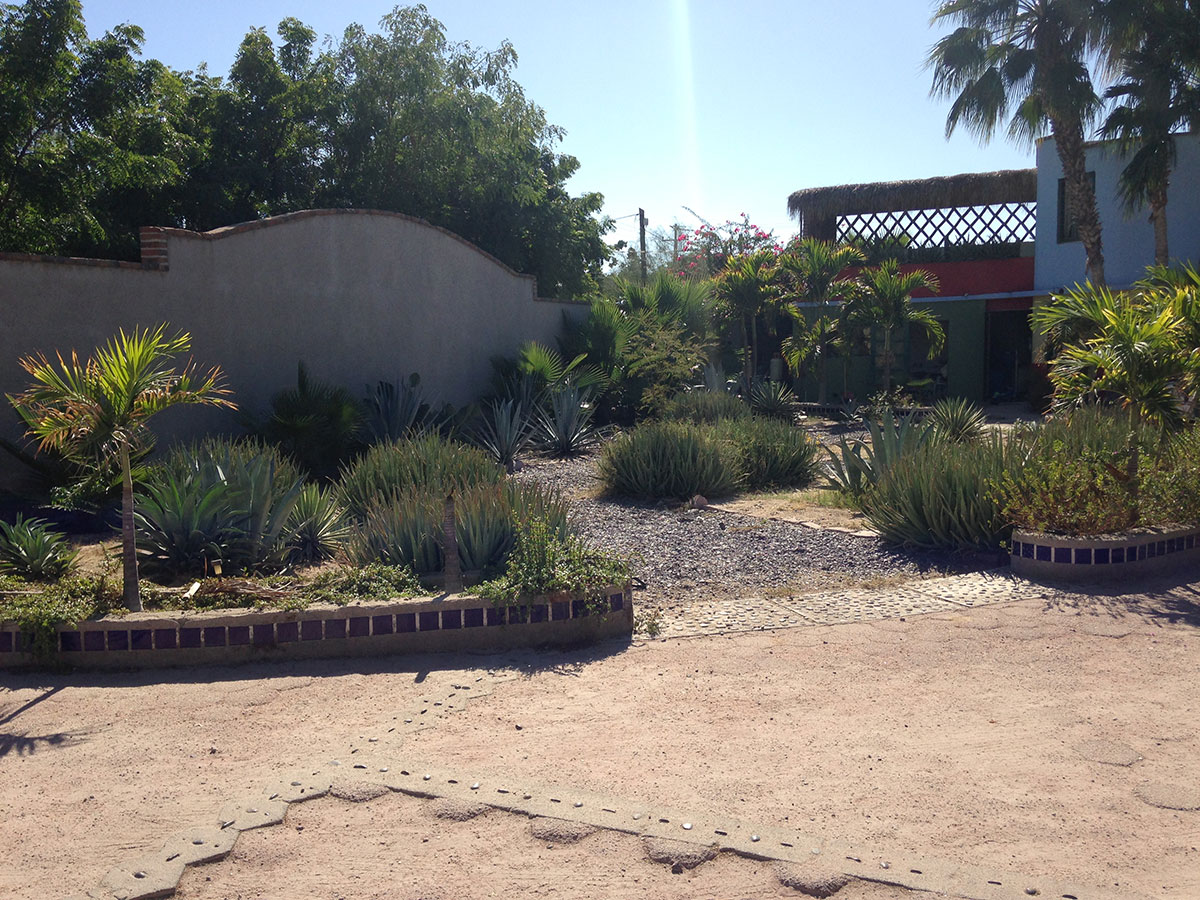
Front garden
Front garden
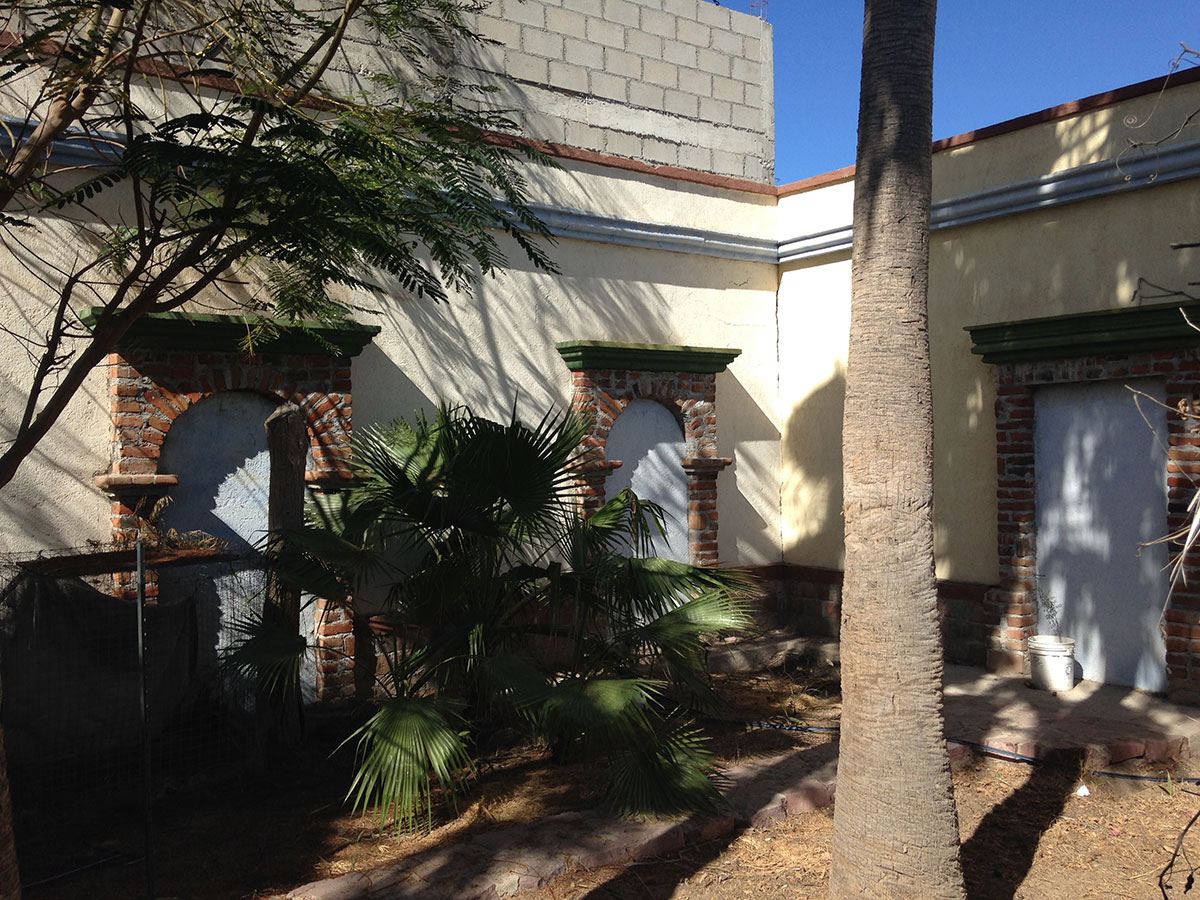
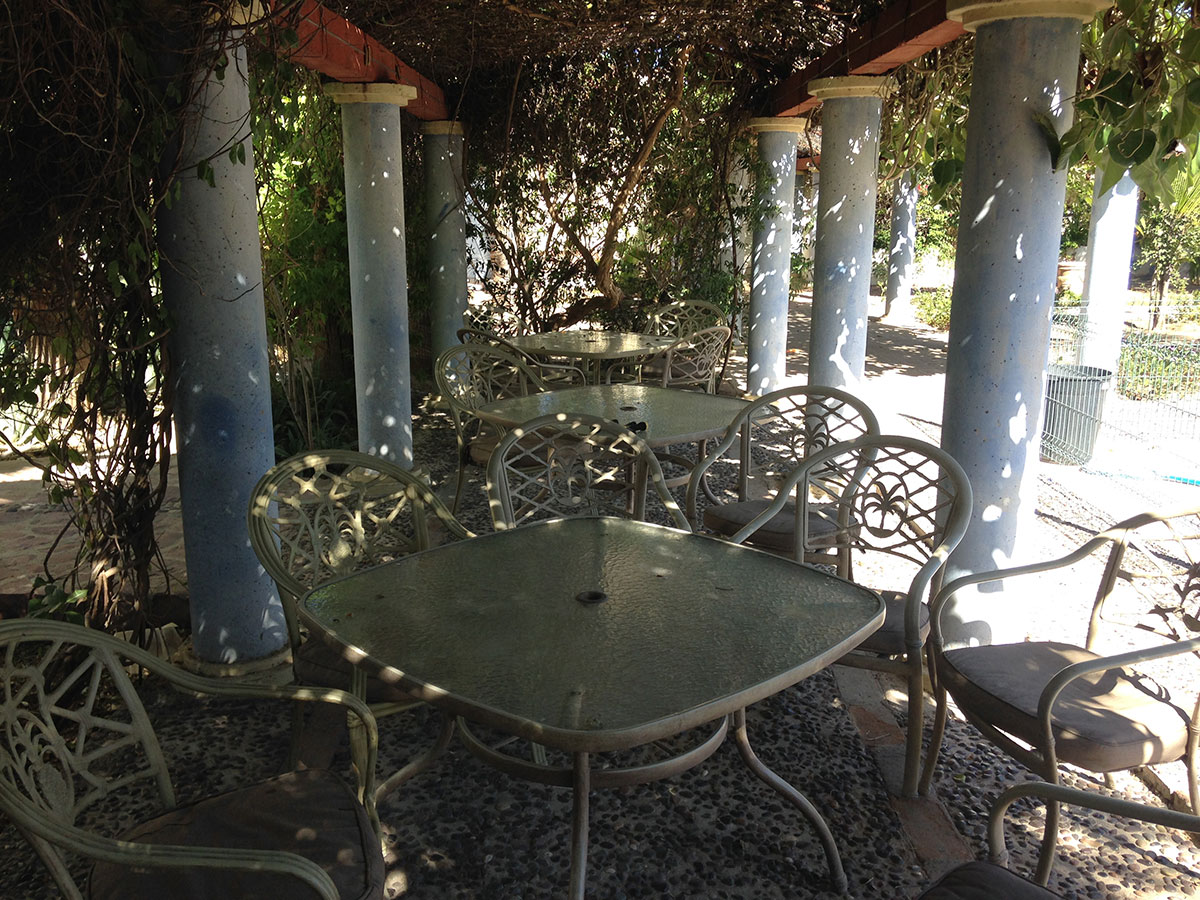
A corner of the compound
My new office
My new office
My other new office
My other new office
My room (yellow)
My room (yellow)
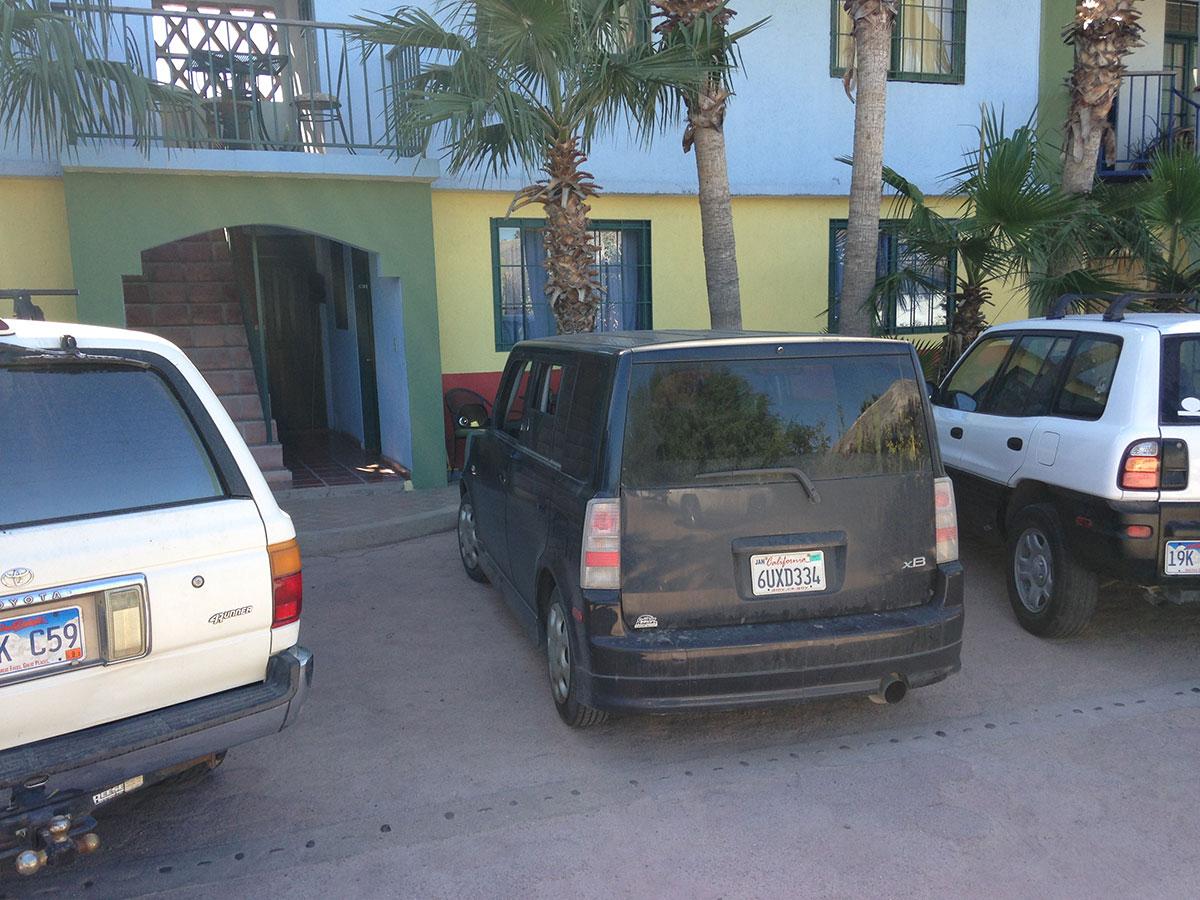
Parking
Parking
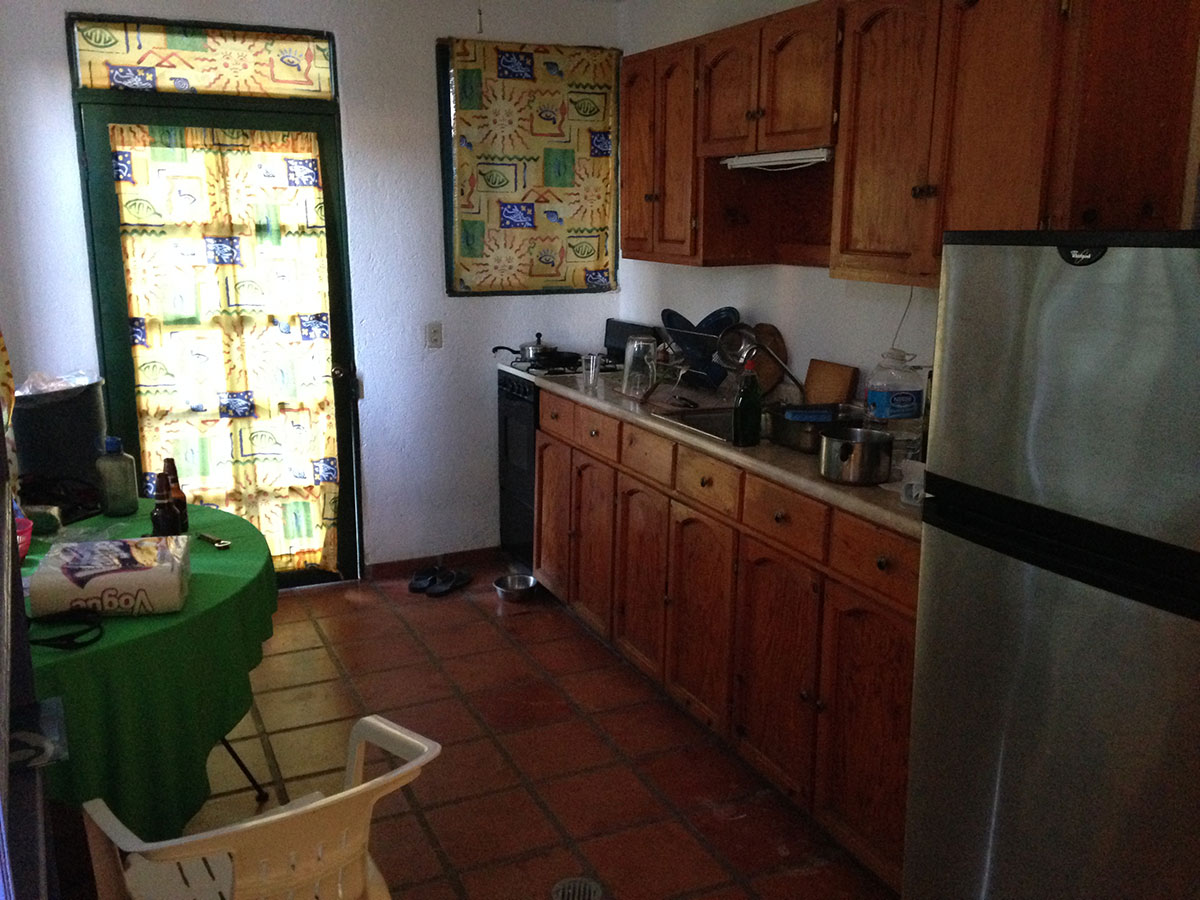
kitchen-entry
Kitchen/entry
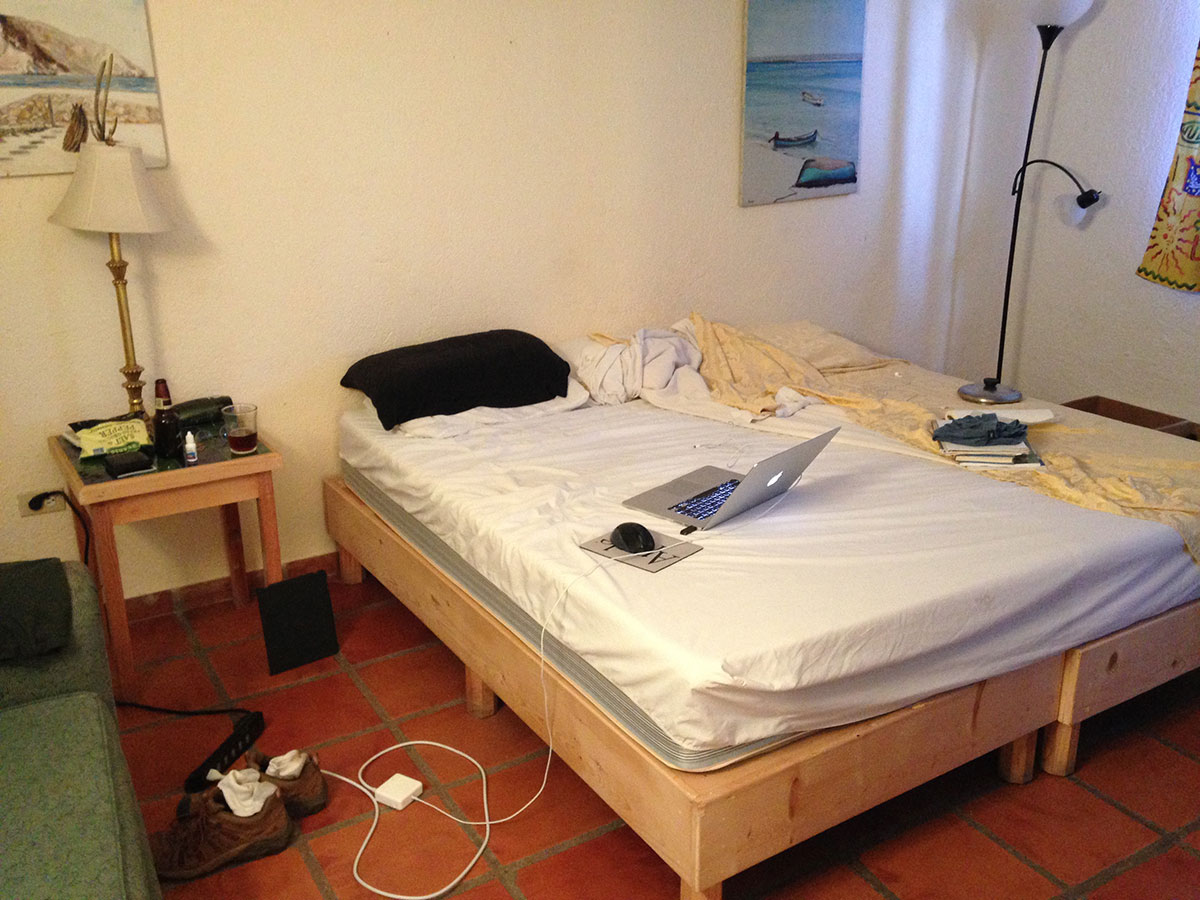
bedroom-area
Bedroom area
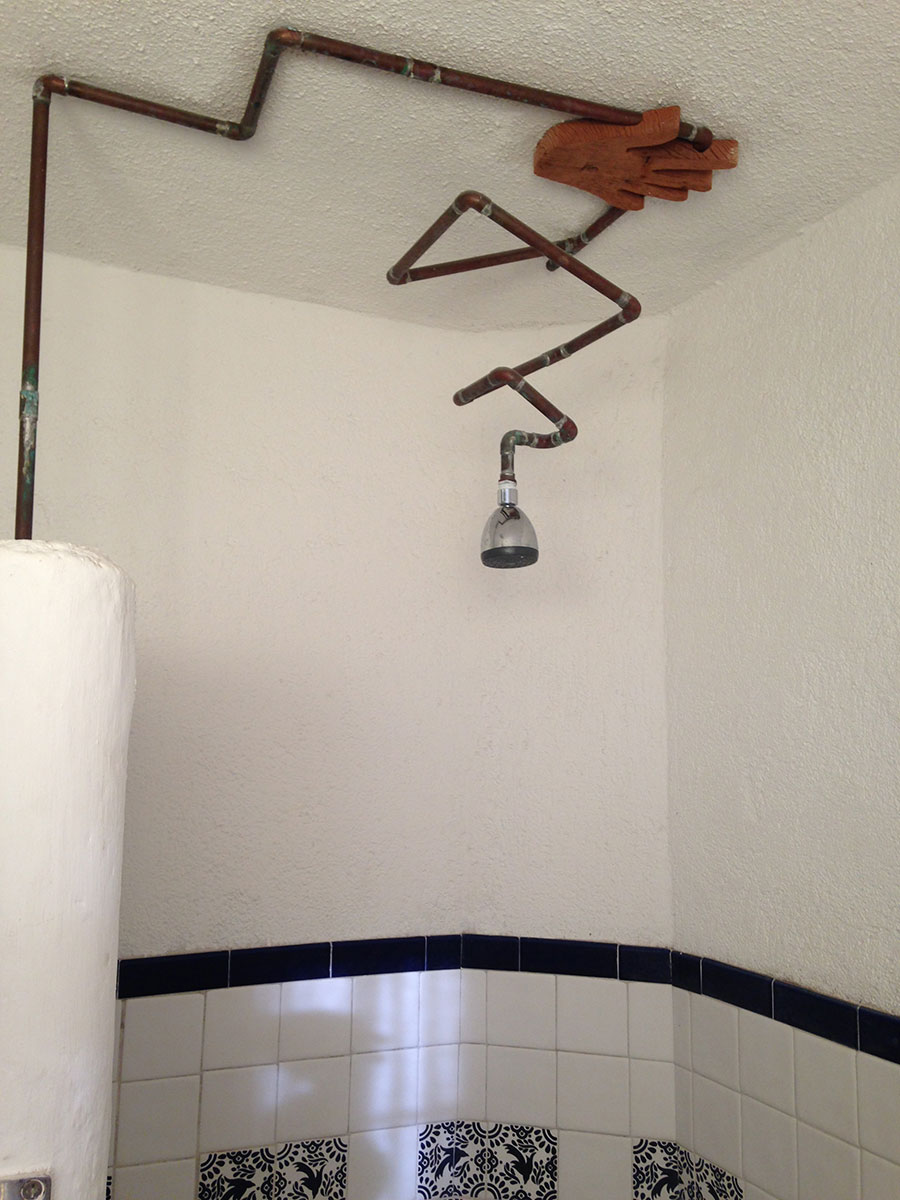
showerhead
showerhead
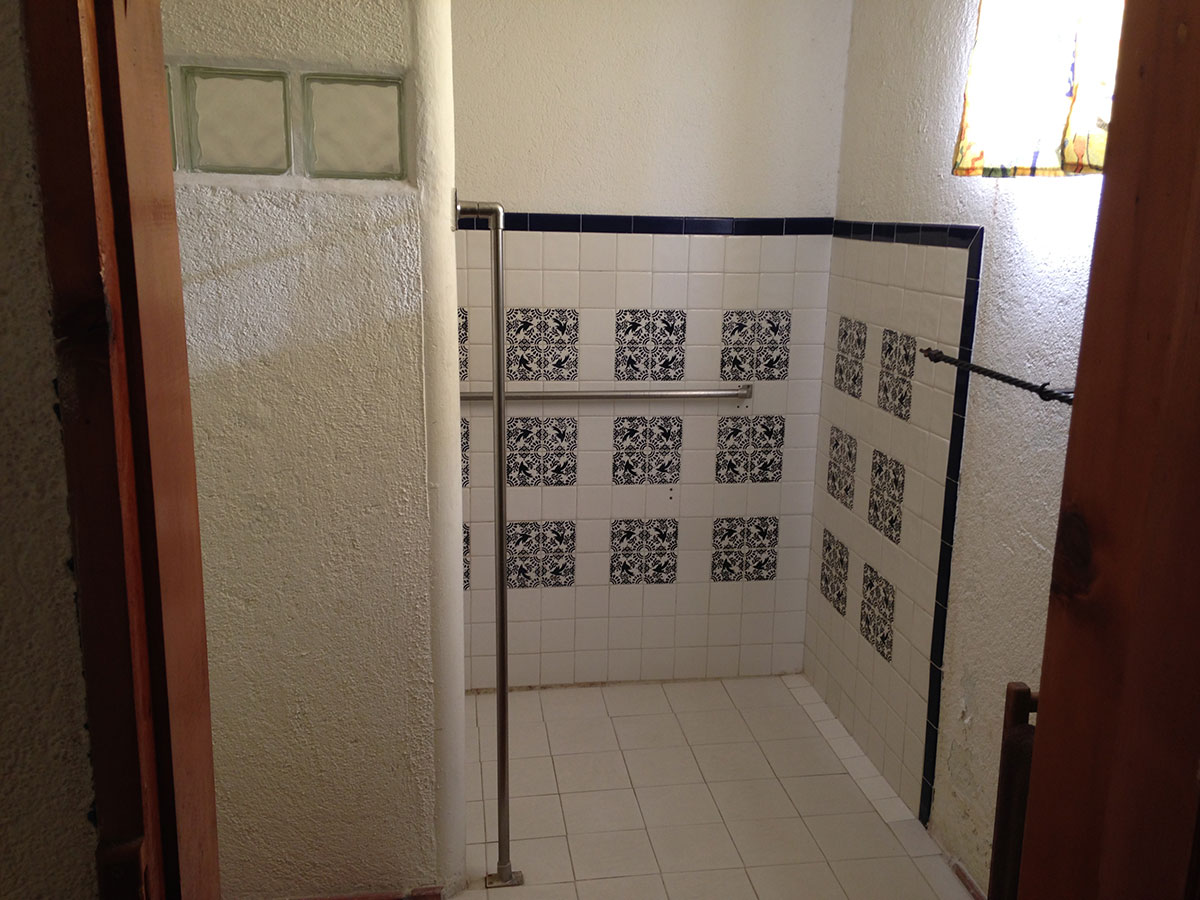
shower
Shower area

Aaaand I missed the party. The vendors were all packing up when I got to the cathedral, and no one was in the church. There wasn’t a whiff of pan de nata on the air, though, so maybe I didn’t miss much.

catedral-at-night
Catedral de Nuestra Señora de La Paz at night
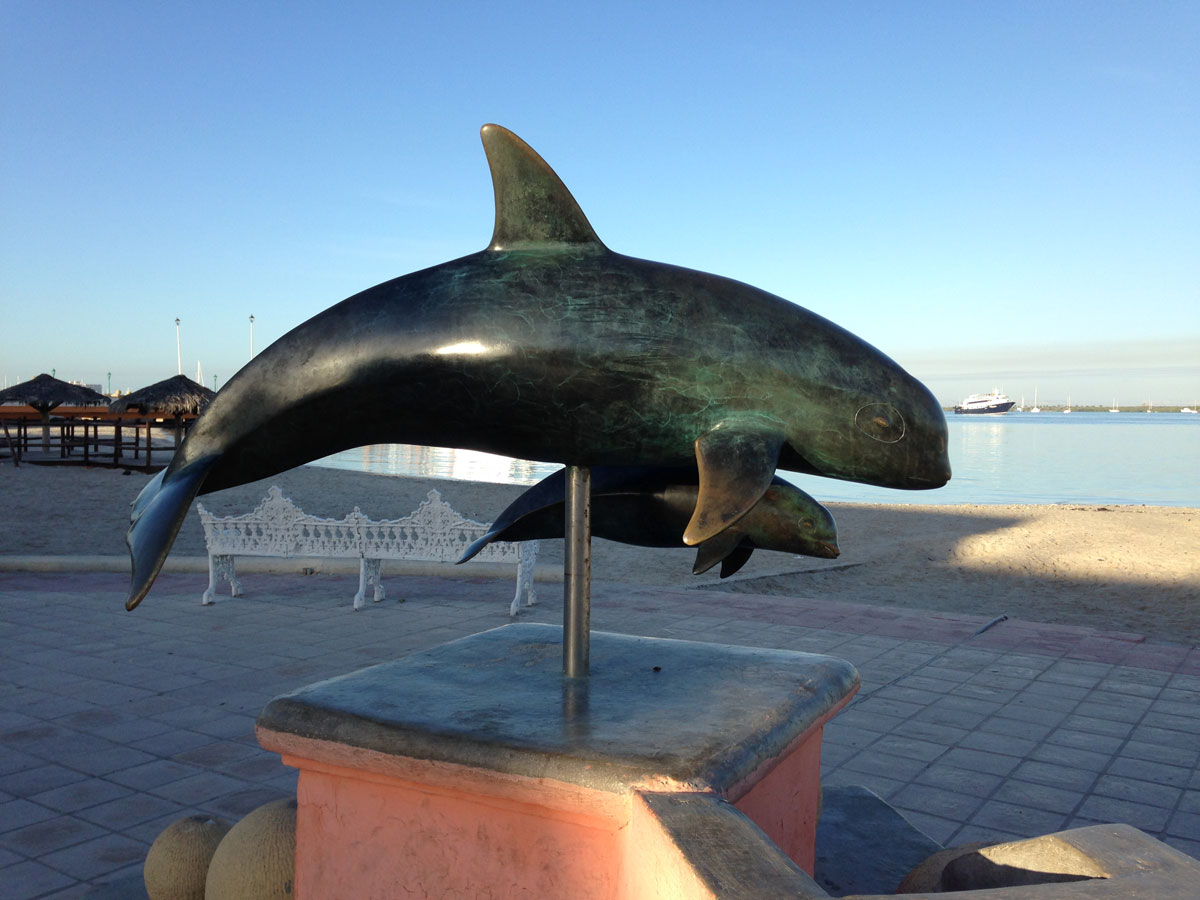
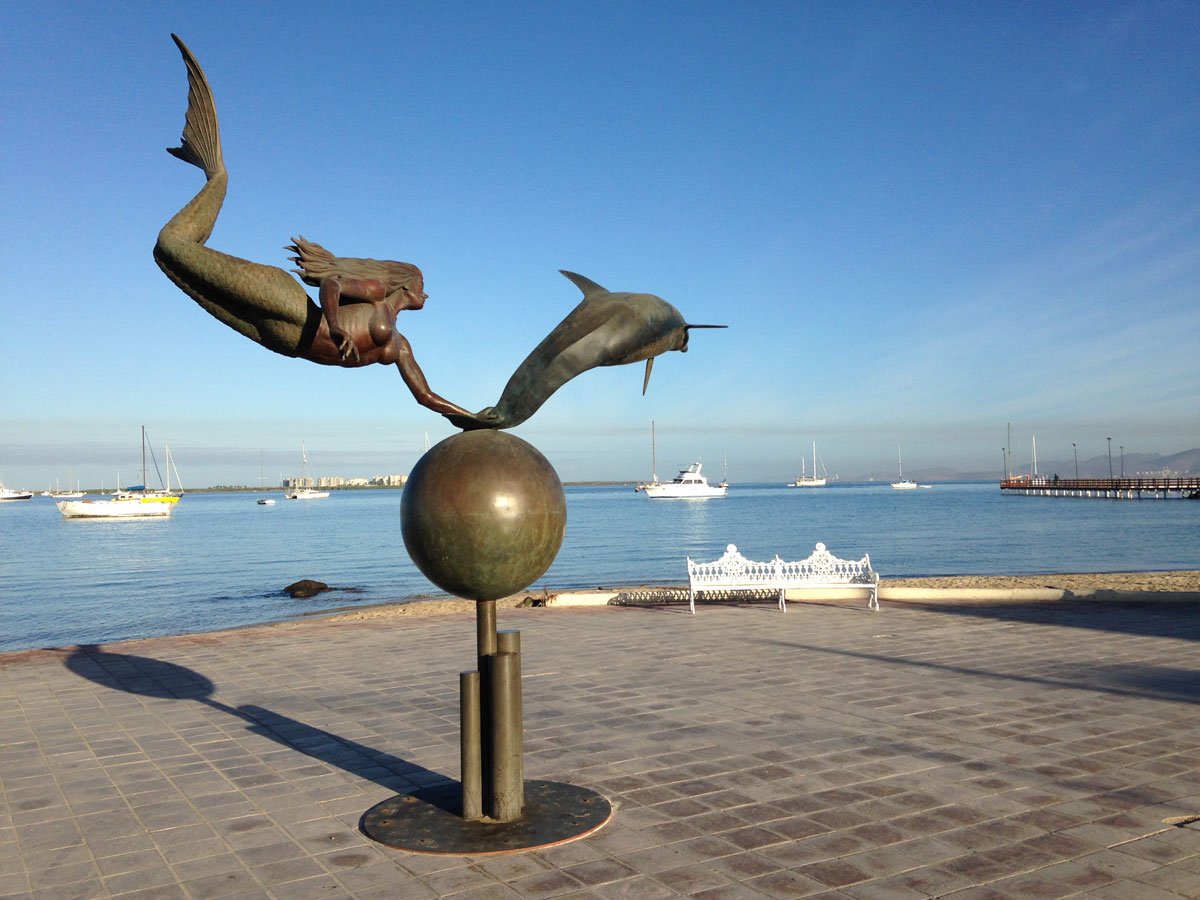
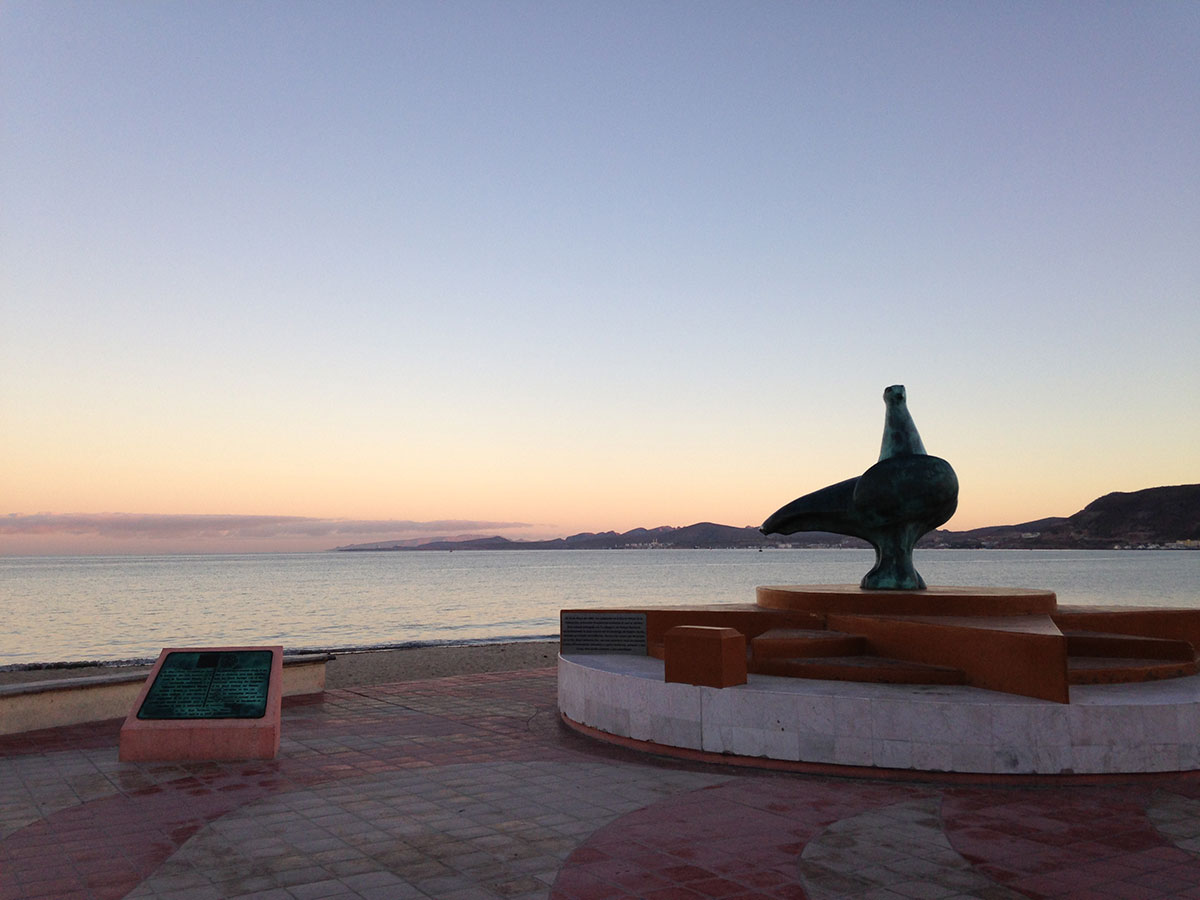
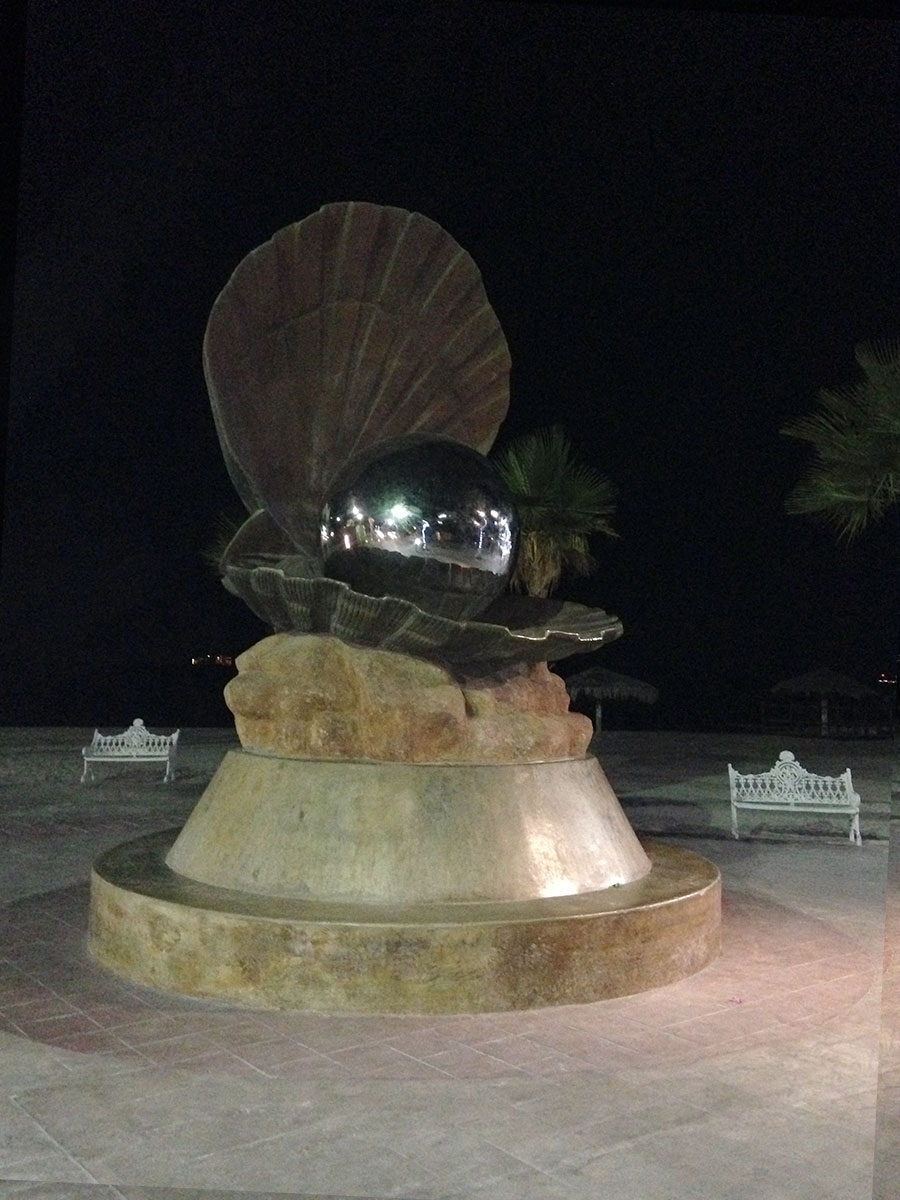
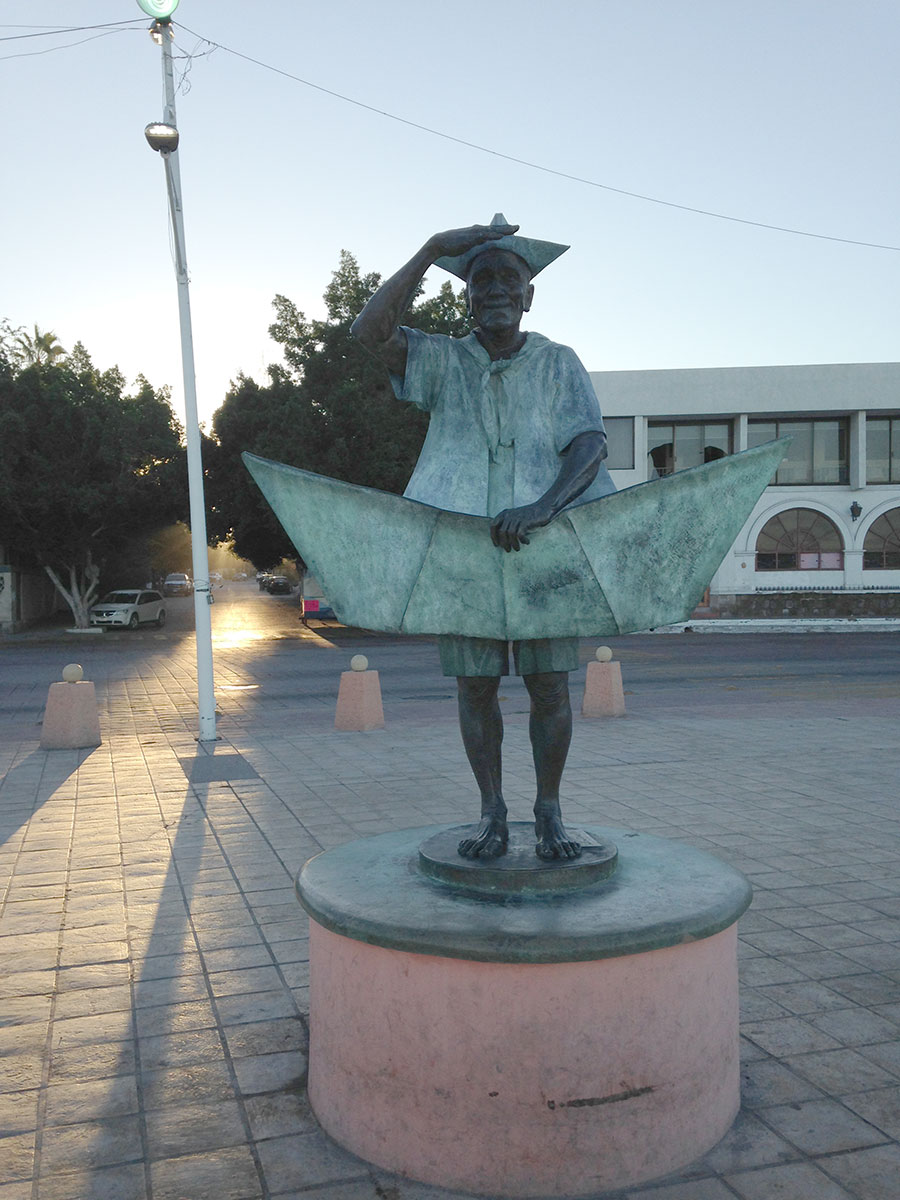
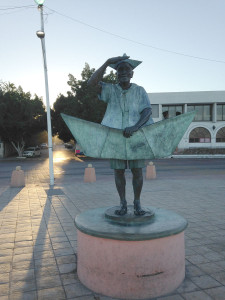
pearl of the promenade
Sculpture on the malecón

Day Three: Santa Rosalía to La Paz

Woke early but not too early, had a shower, finished last night’s leftovers, read a little, just waiting for it to get light. Walked Sasha a bit until we set off a very loud dog. Veered over to the office to see if breakfast might be out early. It wasn’t, but the coffee was, and that’s all I wanted anyway. I tried the french doors in the back of the lobby and, as I suspected, they opened onto a terrace with a view of the sea. Beautiful even in the still dark. Loaded up the car and was on the road at first light.

The road follows the coast for many miles, and the scenery ranged from beautiful to breathtaking to almost mind-blowing, particularly on the stretch from Mulegé to where the road turns inland after Loreto. Unfortunately, I didn’t take any pictures on that stretch–the Transpeninsular was not built to accommodate stoppers and gawkers. But much of the landscape was reminiscent of (what I’ve seen in pictures of) Polynesian islands–steep, rocky mountains with clouds circling the peaks, blue water, palm trees. Will definitely be paying those anchorages a visit.

After that, the road passes for many kilometers over a very flat plain that looks to be all cactus and Joshua trees, with a sprinkling of irrigated alfalfa fields. Pedal-to-the-metal country for me. By this point, I was taking a fatalistic approach to the possibility of having to bribe a policeman. Everyone else was driving 120 kph where the signs usually said 80 kph. I got tired of going slow and tired of holding up traffic so I just tried to flow with it, passing in the no passing zones just like everyone else. The semis will flash their turn signals when it’s safe for you to pass them. One time I passed two at a go, and was definitely into the leap of faith zone by the time I got around both. I think it’s fair to say that the average Mexican has a much stronger faith in the afterlife than I do. Anyway, either I survived or I’m in an alternate universe now.

At long last La Paz appeared across the bay. The directions on Casa Buena’s website were right on so I was soon there with no circling or searching. Five minutes later I was unloading the car while Sasha explored the compound. By this time, she was pretty sick of the car and sick of me for making her keep getting back in the car. She’s still a little mad at me a day later, in spite of a really good walk this morning. After she’d had a chance to run around a bit, I put her in the room and walked to the supermarket for a few supplies. Incidentally, a six-pack of Bohemia Obscura is 90 pesos. That’s about half what it would be in the US if you could find it.

Here are the pics, in roughly the order they were taken:

south-of-StaRos_3
south-of-StaRos_8
south-of-StaRos_9south-of-StaRos_10
south-of-StaRos_1 south-of-StaRos_2  south-of-StaRos_4 south-of-StaRos_5 south-of-StaRos_6 south-of-StaRos_7

Day Two: San Felipe to Santa Rosalía

Up early, had a drive down along the malecón and let Sasha out for a bit. The tide was coming in. The breakfast place I was hoping to patronize  was closed, but there was an espresso place open that had surprisingly good coffee. Pemex wasn’t open but I had almost 3/4 of a tank so off I went. Very little traffic. Lots of deserted-looking campgrounds  and condos by the sea. I was counting on a Pemex station in Puertecito, and there was one, but it was closed and I was told that it would not open later. But the next person I talked to said there was another at Gonzaga Bay, about fifty miles. And so there was. I should have gassed up in San Felipe the night before, but it worked out.

Along the gravel road

The highway after Puertecito was great, but it comes to an end about 40 kilometers short of the Transpeninsular–it’s just not finished yet. So there was about two hours of fairly rough gravel road to get to the next pavement. Oftentimes there were two tracks–a gravel track and a sand track–and no matter which one I chose, as soon as I had made any progress on it the other one looked smoother. Diabolical. I did see my first roadrunner, though, crossing the road in my rear view mirror.

from-the-transpeninsular
Not a picture of the Pacific.

Once on the Transpeninsular, it wasn’t long until the Pacific came into sight in the distance. Rain was blowing in from the west. I actually saw a rainbow after the second shower had passed.

One thing about the Transpeninsular that’s unnerving is the complete absence of any shoulder in most places. Actually, it worse than that–in most places, there is what looks to be a 6″ to 18″ dropoff immediately to the right of the outside lane stripe. In some places, it’s eroded to the point the the dropoff begins inside the stripe. Two lanes with sudden death on either side. And I saw a couple of lone cyclists braving that. Tienen huevos.

Almost to Santa Rosalía--maybe 70 more kilometers?
Almost to Santa Rosalía–maybe 70 more kilometers?

Since I stopped several times to take a picture or let Sasha out, I arrived in Santa Rosalía as it was getting dark. I stopped at the Hotel Industrial and asked for a room, and was told they didn’t accept pets. I had read the Hotel El Morro did, and the desk clerk  at the Hotel Industrial used Google Translate to give me directions there. Unfortunately, they weren’t sufficient, or rather, fortunately, because as a result I let Apple Maps completely misguide me into the heart of a very lively neighborhood that smelled wonderful. I finally gave up crisscrossing the narrow streets when it became clear that the address Apple thought I wanted was being torn down, but it was a fun diversion. Just getting back on the main route eventually deposited me in front of El Morro, where I got a comfortable room for half of what I’d paid in San Felipe, with excellent room service, too. And, as everywhere, some short Spanish lessons.


Day One

My first time in Baja! (And only my second time in Mexico.) I crossed the border at Mexicali about 1:30pm on the 21st. After a lot of anxiety about whether I would be permitted to cross with my computer and bags of tools and dog and…if any of the border officers gave me so much as a brief glance as I drove through a Nothing to Declare lane, I didn’t see it. Bam, I was in Mexicali.

That was the easy part. I had a little more trouble finding the INM office to get my tourist permit. Maybe I wouldn’t have, if I hadn’t read some forum posts earlier that “described” how to go about it. What none of them failed to clearly mention was that the INM office is immediately on your left as you drive in. I think you might even be able to park in front. I was looking for a separate building on the right. Anyway, I drove around in circles for a while, but you can’t drive past the border crossing twice without a hour or two wait northbound. So first I stopped and changed some money and asked there. The cashier was very friendly but didn’t speak enough English to convey the answer, if he had it. A girl waiting with her mother at the next window overheard, and after they conferred, suggested it was a few blocks down on the left. Okay, what to do. Mexicali bustles in that area, and I was slightly paranoid about theft. Having Sasha in the car was probably a good deterrent; on the other hand, I couldn’t park anywhere in the sun. So I found a parking garage a block from the border crossing and legged it back to the border crossing. Found a guard there that spoke some English, and he did not know. What? He sent me back “about five blocks on the left, there’s a park, turn left. I think maybe there.” There I did find the tourist policia, and just happened to catch the attendant as he was leaving. He did know where it was, and sent me back to about 50 feet from where I’d left the border officer. There was no line, and in about five minutes I had received my permit and paid for it (usually a separate step involving a trip to a bank). Joy! I was free to drive on to San Felipe, where I had no reservations and not even the name of a hotel.

It’s sort of true what they say about driving in Mexico–it’s a free for all. What a lot of people fail to mention, though, is that it’s a pretty polite free for all. True, lanes are ignored and turn signals only used in extremis, but everyone knows what we’re trying to do, right? Let’s just get on with it. It works.

Southbound out of Mexicali

Leaving town on very good four lane road, I was passed by an uncovered semi loaded with what I surmised, from the smell and the periodic emission of empty plastic bags, was garbage. A look around confirmed that this was a common thing; there was plastic trash everywhere. And that turns out to be endemic. Everywhere that I have pulled over to take a picture so far, there has been trash–lots of trash–strewn in the undergrowth for as far as you can see. It’s a shame, because on that scale, it’s hard to see how it could ever be cleaned up, and it’s going to take decades to biodegrade.